How to Keep a Dog Cool in a Hot Apartment
In this article
How to Keep a Dog Cool in a Hot Apartment
Heat in a small apartment without air conditioning can become dangerous for dogs faster than most owners realize. Dogs don’t sweat efficiently: they cool primarily through panting, which has limits. In a hot, poorly-ventilated apartment, a dog can reach heat stress in less time than it would take a person to feel uncomfortable.
Managing your dog’s temperature on hot days is not complicated, but it requires taking it seriously.
Warning Signs of Overheating in Dogs
- Heavy, labored panting that doesn’t slow down even at rest
- Bright red gums and tongue
- Drooling more than usual
- Lethargy or weakness
- Vomiting or diarrhea
- Glazed eyes
- In severe cases: collapse or loss of consciousness
If you see these signs, move the dog to the coolest available space immediately and contact your vet. Heat stroke in dogs is a medical emergency.
How to Keep the Apartment Cool for Your Dog
Create airflow even without AC
- What works: Cross-ventilation is more effective than a single fan. Open windows on opposite sides of the apartment to create airflow. Place a fan facing outward in one window to pull hot air out, and open another on the opposite side to draw cooler air in (if outdoor temperature is cooler than indoor).
- Important note: This only works when the outdoor temperature is below indoor temperature, which is usually before 10am and after sunset in summer. During peak heat hours, keeping windows closed with blinds drawn is cooler than opening them to hot outdoor air.
Cool the dog, not just the room
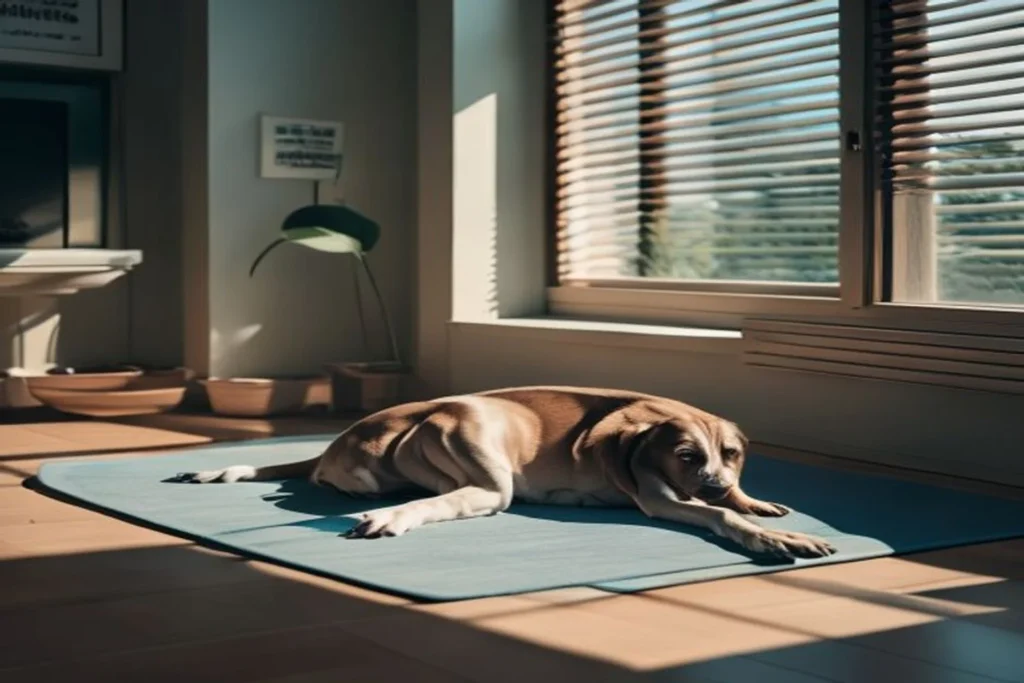
- Cooling mat: Gel-filled cooling mats work through pressure-activated cooling. No need to refrigerate them. Place in the dog’s resting area. Most dogs figure them out within a few hours.
- Wet towel or damp bandana: Drape a cool (not ice-cold) damp towel over the dog’s back or around the neck. Focus on areas with blood vessels close to the surface: neck, armpits, paw pads, and groin. Avoid ice-cold water. It causes blood vessels to contract, reducing the cooling effect.
- Cool water to drink: Keep fresh cool water available at all times. Some dogs respond to ice cubes in their bowl; others prefer room temperature. Know your dog’s preference.
Adjust the walking schedule on hot days
- Walk before 9am and after 7-8pm in summer. The pavement temperature at midday can cause paw pad burns: if you can’t hold your hand on the pavement for 5 seconds, it’s too hot for your dog to walk on.
- Shorter walks in the shade over longer walks in the sun.
- Watch the dog’s pace: if they’re slowing down significantly or seem reluctant to continue, go back inside.
Freeze treats for extended relief
- Frozen Kongs (stuffed with peanut butter or wet food, then frozen overnight) take 20-40 minutes to eat and keep dogs cool and occupied. Frozen treats also cool from the inside while the dog eats them.
- Ice cubes with treats frozen inside are a similar approach.
Breeds at Higher Risk in Heat
Flat-faced breeds (brachycephalic) are significantly more vulnerable to heat: Bulldogs, Pugs, French Bulldogs, Boston Terriers. Their shortened airways make panting less efficient, so they overheat faster. These breeds need air conditioning on hot days, not just fans.
Large breeds, double-coated breeds, and overweight dogs are also higher risk and need more proactive management.
Heat questions for apartment dogs
Is a fan enough to cool a dog in extreme heat?
A fan helps with airflow but doesn’t cool the air temperature. In extreme heat (above 35°C/95°F), a fan alone is not sufficient for brachycephalic breeds or dogs with health conditions. For other dogs, a fan combined with a cooling mat, access to cool water, and shade usually provides adequate relief if the apartment isn’t excessively hot.
Can I leave my dog alone in a hot apartment?
The key question is what temperature the apartment will reach while you’re gone. If it’s going to exceed 27-28°C (80-82°F) without AC or effective airflow, that’s dangerous territory for a dog alone. In that situation: doggy daycare, a dog sitter, or leaving your AC on are the appropriate options.
Are kiddie pools or water bowls for soaking safe?
Yes. A shallow kiddie pool in a bathroom or balcony gives dogs the option to wade and cool themselves. Some dogs love it; others prefer to avoid water. Never leave a dog unsupervised in water that’s deeper than they can easily stand in.
Do dogs sweat through their paws?
Yes, dogs have sweat glands in their paw pads and around their nose. But this contributes very little to overall heat regulation: panting does most of the work. That’s why cooling the paw pads (with cool (not cold) water or a cooling mat) can actually help with overall body temperature, since it does improve the minor sweating that occurs there.
Practical checklist
- ☐ Keep fresh cool water available at all times on hot days
- ☐ Place a cooling mat in the dog’s main resting area
- ☐ Walk before 9am and after 7pm during summer
- ☐ Close blinds and windows during peak heat hours
- ☐ Freeze Kongs or treats the night before hot days
Avoid these
- Using ice-cold water or ice packs directly on the dog: this constricts blood vessels and reduces cooling efficiency.
- Walking flat-faced breeds in midday summer heat without recognizing their increased vulnerability.
- Leaving a dog in a closed apartment on a hot day assuming they’ll “be fine.”
Adjust the routine before the heat arrives
Keeping a dog cool in a hot apartment is mostly about adjusting the routine and having the right tools ready: a cooling mat, access to cool water, frozen treats, and a walking schedule that avoids peak heat. For flat-faced breeds or extreme heat, air conditioning isn’t optional, it’s a safety requirement. Take the warming apartment seriously before you see signs of distress.