How to Create a Cat-Friendly Balcony Safely
In this article
A balcony can be one of the best enrichments for an indoor cat. Fresh air, outdoor smells, and visual stimulation that no indoor window fully replaces.
The challenge is making it safe. Cats can fall from balconies, escape through gaps, or encounter hazards like toxic plants.
> 💡 Key idea: The goal is “catio” principles on a budget: full access to outdoor air and views with zero possibility of escape or fall.
Quick summary (for busy people)
- ✔️ Mesh netting is the most reliable safety solution
- ✔️ Check every plant: many common balcony plants are toxic to cats
- ✔️ Provide shade and water for hot days
- ✔️ Supervise until you’re confident in the setup
How to create a safe cat balcony
1) Install safety mesh or netting
- Why it matters: Cats that fall from balconies suffer serious injuries even from lower floors. Curiosity overrides caution.
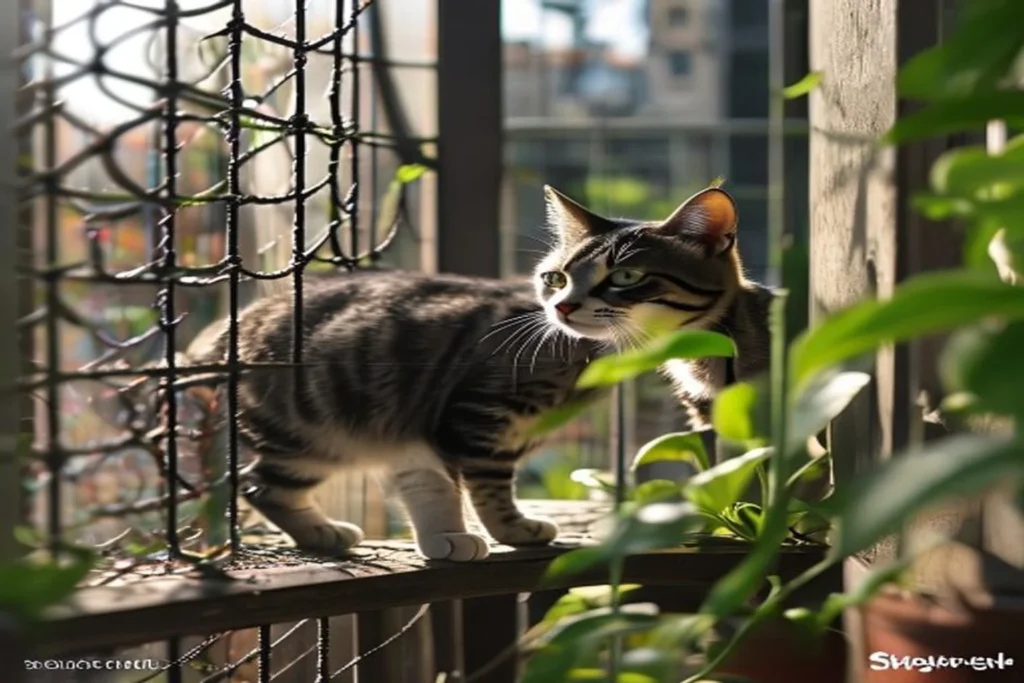
- How to do it: Balcony cat netting kits are available specifically for this purpose. They attach to the railing with tensioned lines and cover the full opening. Look for 1-2 cm mesh that cats can’t squeeze through.
- Common mistake: Assuming the cat “knows better” or won’t jump at a bird.
2) Check every plant for toxicity
- Why it matters: Many popular balcony plants are toxic to cats: lilies (highly dangerous), oleander, tulip bulbs, azalea.
- How to do it: Cross-reference every plant with the ASPCA toxic plant database before placing it where your cat can reach. Safe options include lavender, catnip, cat grass, and rosemary.
- Common mistake: Assuming a plant is safe because it’s common or decorative.
3) Provide shade, water, and shelter
- Why it matters: Balconies can get extremely hot, and cats can overheat quickly.
- How to do it: A covered area for shade, fresh water available at all times, and somewhere for the cat to retreat inside easily.
- Common mistake: Leaving the cat outside on hot sunny days without shade or water.
4) Secure railings and gaps
- Why it matters: Vertical railing gaps wider than 5 cm can allow a cat to get stuck or escape.
- How to do it: Check every gap. Temporary plexiglass panels can close railing gaps without permanent modification. These are renter-safe and removable.
- Common mistake: Only netting the top and leaving vertical gaps in the railing.
Balcony safety questions
Is it safe to let cats on balconies unsupervised?
Only once the setup is fully secured and you’ve verified there are no escape routes. During the first few weeks, supervise to check the netting and identify any gaps you missed.
Can cats fall and land safely from balconies?
The “righting reflex” is real but not reliable at all heights. Low floors (1-2) are often more dangerous than high ones due to less time to orient. Never assume a fall is safe.
What if my building doesn’t allow netting?
Check your lease carefully: most prohibit permanent fixtures, not removable systems. Tension-mounted netting typically leaves no marks and is generally acceptable.
What mesh size is safe for cats?
1-2 cm maximum. Larger gaps risk a cat squeezing through or getting stuck.
Are all lilies toxic to cats?
True lilies (Lilium species) are highly toxic and can cause kidney failure from even small amounts. Easter lilies, tiger lilies, and daylilies are all dangerous. Remove them completely.
Run through this
- ☐ Safety mesh installed covering all openings
- ☐ All plants verified non-toxic
- ☐ Shade and water available
- ☐ Railing gaps secured
- ☐ First sessions supervised
Common mistakes
- Partial netting that leaves gaps a determined cat can exploit.
- Toxic plants anywhere within reach.
- Assuming apartment height is the safety factor.
Pro tip
Cat grass and a catnip plant on the balcony create strong positive associations with the space. The cat will want to be out there, which makes the enrichment value much higher.
Never without a barrier
A cat-friendly balcony is one of the best investments for an indoor cat’s quality of life in an apartment. The safety setup takes an afternoon and lasts years. Check the netting, remove toxic plants, and your cat gets a daily outdoor enrichment zone that you don’t have to supervise continuously.