How to Set Up a Comfortable Space for Your Cat in a Small Apartment
In this article
Setting up a comfortable space for your cat in a small apartment is easier than it sounds. Cats don’t need a lot of room: they need the right kind of space: somewhere to climb, somewhere to hide, and somewhere to watch the world from.
If you’re living in a studio or one-bedroom and wondering how to make it work for both you and your cat, this guide covers everything you actually need to know.
What cats actually need in a small space
Before buying anything, it helps to understand what cats are really looking for. In the wild, cats spend their time climbing, observing, hiding, and hunting. Your apartment setup should give them some version of all four.
The good news is that vertical space counts as much as floor space. A cat with access to high shelves or a cat tree feels like it has a much bigger territory than one confined to the floor level.
The essentials: what your cat’s space needs
1. A litter box in a low-traffic spot
The litter box should be in a quiet corner where your cat can use it without feeling exposed. Avoid placing it near food or water bowls. In a small apartment, a bathroom corner or a spot under a shelf works well.
2. Vertical space to climb and observe
A simple cat tree or a few wall-mounted shelves at different heights give your cat a place to climb, rest at elevation, and observe the room. Cats feel safer when they can watch from above. This is especially important in small apartments where floor space is limited.
3. A dedicated resting spot
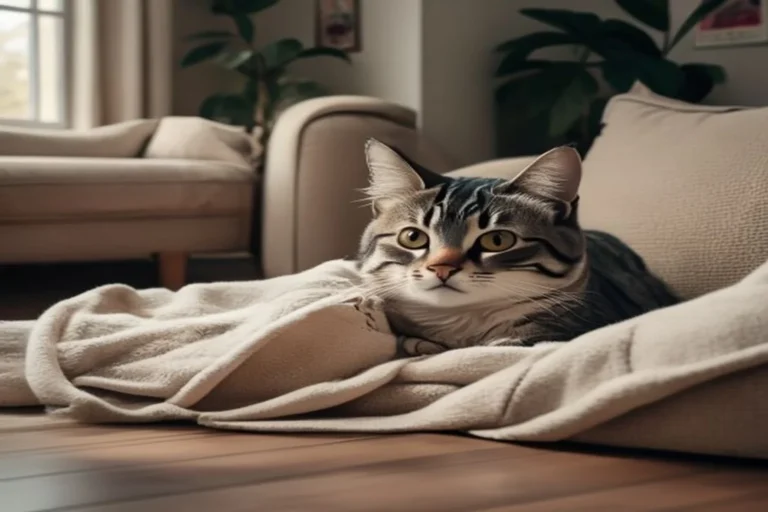
Cats sleep a lot, up to 16 hours a day. They’ll sleep anywhere, but they do better with a consistent, cozy spot they can call their own. A soft bed near a window is ideal: warmth from sunlight and something to watch outside.
4. A scratching post (non-negotiable)
If you don’t provide a scratching surface, your cat will use your furniture. It’s not bad behavior, it’s just what cats do to maintain their claws and mark territory. A tall sisal post near where your cat spends most of its time is the simplest solution.
5. Window access
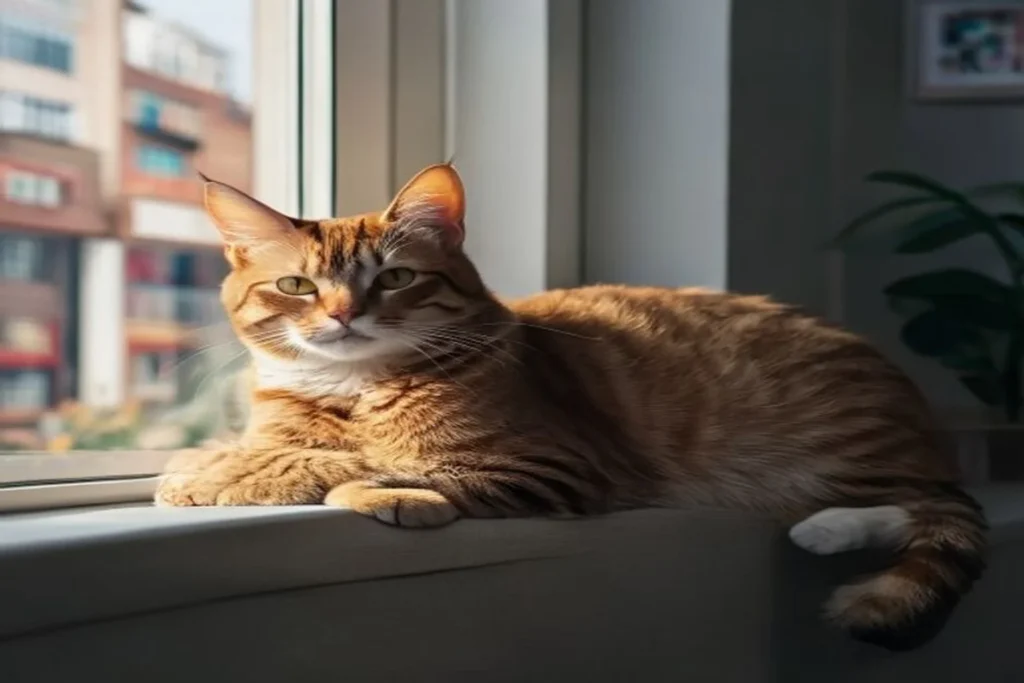
A window with a view is one of the best forms of enrichment for an indoor cat. Place a cat perch or a piece of furniture near a window so your cat can watch birds, people, and movement outside. It’s simple enrichment that costs almost nothing.
Making it work in a small apartment
The biggest challenge with small apartments isn’t the cat, it’s fitting everything without the space feeling cluttered. A few practical approaches:
- Use vertical space: wall-mounted shelves and cat trees take up minimal floor space while giving your cat a lot of territory.
- Choose multi-purpose furniture: a storage ottoman can double as a cat bed. A window bench can be a cat perch.
- Keep it simple: one good cat tree, one scratching post, one cozy bed. Cats don’t need much, they need the right things.
- Contain the mess: a mat under the litter box catches scattered litter. A designated feeding spot with a mat underneath keeps food areas clean.
Questions about cat setups in small spaces
Can a cat be happy in a small apartment?
Yes, absolutely. Cats adapt well to small spaces as long as they have vertical space to climb, a window to watch from, and enough mental stimulation. Many cats are perfectly content in studios.
How many litter boxes does one cat need in an apartment?
One litter box is usually fine for one cat in an apartment, as long as it’s cleaned daily. Some cats prefer two boxes: one for urinating, one for defecating. If your cat seems reluctant to use the litter box, adding a second one often helps.
What’s the minimum space a cat needs to be comfortable?
There’s no fixed minimum, but a cat that has vertical space, a window, and a hiding spot can be comfortable in almost any size apartment. Floor area matters less than environmental richness.
Should I keep my cat in one room at first?
Yes, especially with a new cat. Start with one room for the first few days so your cat can adjust gradually. Once it seems calm and comfortable, open up the rest of the apartment.
Do cats get bored in apartments?
They can. Regular play sessions (10-15 minutes twice a day), window access, and puzzle feeders go a long way in keeping indoor cats mentally stimulated.
Is it better to have two cats in a small apartment?
It depends on the cats. Two compatible cats can keep each other company and reduce boredom. But two cats that don’t get along in a small space creates stress. If you’re getting a second cat, introduce them slowly and make sure each has its own resources.
Design beats floor area
Setting up a cat-friendly apartment doesn’t require a big space or a big budget. Focus on the basics: a good litter box spot, vertical space, a window perch, and a scratching post. Get those right and your cat will be comfortable regardless of how small your apartment is. If you have specific concerns about your cat’s health or behavior, your vet is always the best resource.