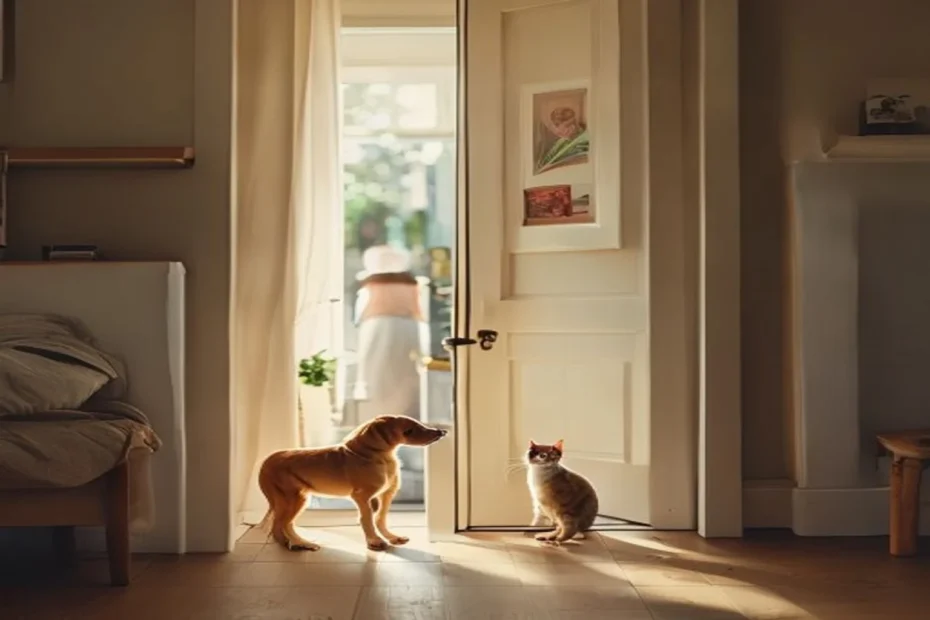
You walk to the kitchen, your dog follows. You go to the bathroom, your dog is right there at the door. You sit down to work and feel a warm body settle against your feet. If your dog follows you everywhere, you are living with what some people lovingly call a velcro dog.
Most of the time this is sweet and totally normal. Dogs are social animals, and in a small apartment you are basically their whole world. But sometimes shadowing can tip into something more anxious, and it helps to know the difference.
This guide breaks down why your dog follows you everywhere, what is healthy, and the signs that mean it is worth a closer look.
Why your dog follows you everywhere
The short answer: you are their favorite thing. Dogs are pack animals by nature, and you are the center of the pack. Following you around is how they stay close to safety, food, attention, and the person who runs the whole show.
In an apartment, this gets amplified. There is less space to roam, fewer rooms to explore, and you are usually the most interesting thing happening. So your dog tracks your movement the way you might glance at your phone, out of habit and a bit of hope that something good is about to happen.
Following can also be learned. If your dog trails you into the kitchen and sometimes gets a treat, or follows you to the couch and gets a cuddle, they quickly figure out that sticking close pays off. That is not a problem on its own. It only becomes one when the dog cannot relax unless you are in sight.
The main reasons behind the shadowing
Following behavior usually comes down to a handful of motivations. Most dogs have more than one going at once.
Bonding and companionship
This is the most common reason and the most harmless. Your dog likes you. They feel safe near you and enjoy your company. A dog that follows you calmly, lies down nearby, and goes about its day without panic is just being a dog who loves their human.
Breed and personality
Some dogs are wired to stick close. Herding and companion types were bred to work alongside people and tend to be more attached. A dog like this following you is normal for who they are, not a red flag. No breed is a problem here, it is simply temperament.
Routine and reinforcement
Dogs love patterns. If your movements predict good things (meals, walks, play, treats), your dog learns to read your body and follow the cues. They are not being clingy so much as paying attention to the schedule you taught them.
Boredom or under-stimulation
A dog with not enough to do will often default to following you, because you are the most interesting option in the room. This is common in apartments where exercise and enrichment can run short. If your dog seems restless and shadows you out of nothing-better-to-do, more activity usually helps.
Anxiety or insecurity
This is the one to watch. A dog that follows you because it cannot cope alone may be feeling anxious. Here the following is tense, not relaxed, and it often comes with other signs of stress that we cover below.
Quick answers
Is it normal for my dog to follow me everywhere?
Yes, for most dogs it is completely normal. Dogs are social and bond closely with their people, especially in a small home. As long as your dog can also rest calmly and is not panicked, following you is a sign of affection, not a problem.
Why does my dog follow me but not other people?
You are likely the main caregiver: the one who feeds, walks, and spends the most time with them. Dogs attach most strongly to the person who meets their needs and feels like home base, so you get the closest shadow.
Should I worry if my dog follows me everywhere?
Only if the following comes with stress signs like pacing, whining, panting, or panic when you leave. Calm, happy following is healthy. Anxious, frantic clinging is worth discussing with your vet.
Why has my dog suddenly started following me more?
A sudden change can be triggered by a new routine, a move, a new pet or person, or feeling unwell. If the shift is dramatic or paired with other changes in appetite or energy, it is a good idea to check in with your vet.
When to worry and what to watch for
Following becomes a concern when your dog cannot function without you in view. Keep an eye out for these signs:
- Whining, barking, or pacing the moment you step out of sight
- Panting, drooling, or trembling when you get ready to leave
- Destructive behavior, accidents, or attempts to escape when alone
- Inability to settle or nap unless they are touching you
- A sudden, sharp increase in clinginess with no obvious cause
- Following paired with changes in appetite, energy, or toileting
A few of these together can point to separation anxiety, and the last one can sometimes signal a health issue. None of this means your dog is broken. It means they could use some support. If the behavior is intense or new, talk to your vet first to rule out anything physical, then work on building independence.
The good news is that gentle distance helps. Encourage your dog to settle in their own spot with a chew or a cozy bed. Practice short, calm departures so being alone feels routine, not scary. And make sure they get enough exercise and mental work, because a tired, satisfied dog is far more relaxed about giving you a little space.
Conclusion
If your dog follows you everywhere, the odds are high that you simply have a devoted companion who feels safest by your side. That is one of the best parts of sharing a small space with a pet. Watch for the difference between calm shadowing and anxious clinging, give your dog enrichment and a comfortable spot of their own, and you will likely keep the affection without the stress. If the following looks panicked or shows up suddenly, consult your vet to be safe.
You might also like
- Why Your Dog Whines and What It’s Trying to Tell You
- How to Create a Calm Hideaway for an Anxious Pet in a Small Apartment
- How to Tell If Your Pet Is in Pain: The Subtle Signs to Watch
FAQ
Can I train my dog to stop following me so much?
Yes. Reward your dog for settling in their own bed, use a chew or puzzle toy to keep them busy in another spot, and practice short departures. Build independence slowly and praise calm, alone time.
Does following me mean my dog is dominant?
No. Following has nothing to do with dominance. It is about attachment, habit, and feeling safe near you. A dog that shadows you is bonded, not bossy.
Will getting a second pet stop my dog from following me?
Sometimes it helps, but not always. A second pet can ease boredom, yet a truly anxious dog may still cling to you. Focus on enrichment and independence training first, and ask your vet before making a big change.

Jamie Cole is a content creator focused on practical pet care for apartment living. At NestPath, Jamie shares straightforward guides on cat and dog care, pet behavior, and making small spaces work for both owners and their animals. The goal is clear, judgment-free advice for everyday pet owners who just want to do right by their pets.