
Why Your Cat Scratches Furniture and How to Stop It
In this article
If your cat is scratching your furniture, it’s not being difficult or destructive. Scratching is a normal, necessary behavior for cats, and the goal isn’t to stop it, but to redirect it to the right place.
Here’s why cats scratch and what you can actually do about it.
Why cats scratch in the first place
Scratching serves several purposes for cats:
- Claw maintenance: scratching removes the outer sheath of the claw as it grows
- Stretching: cats use vertical scratching surfaces to stretch their shoulders and back
- Marking territory: cats have scent glands in their paws: scratching leaves both a visual and scent mark
- Stress relief: scratching is calming and satisfying for cats, especially after waking up
Understanding this is important because it means you can’t simply punish scratching away. You need to provide a better alternative.
What makes a good scratching post
Most scratching problems happen because the available scratching post isn’t what the cat actually wants. Here’s what to look for:
- Height: must be tall enough for your cat to fully stretch: at least 60-70 cm for most cats
- Stability: if the post wobbles when the cat uses it, it won’t use it. Must be completely stable
- Material: sisal rope is the most popular and effective. Some cats prefer carpet or cardboard: observe what surfaces your cat tends to scratch
- Orientation: some cats prefer vertical posts, others prefer horizontal surfaces (like a flat cardboard scratcher on the floor)
How to redirect your cat to the post
Step 1: place the post where the problem is
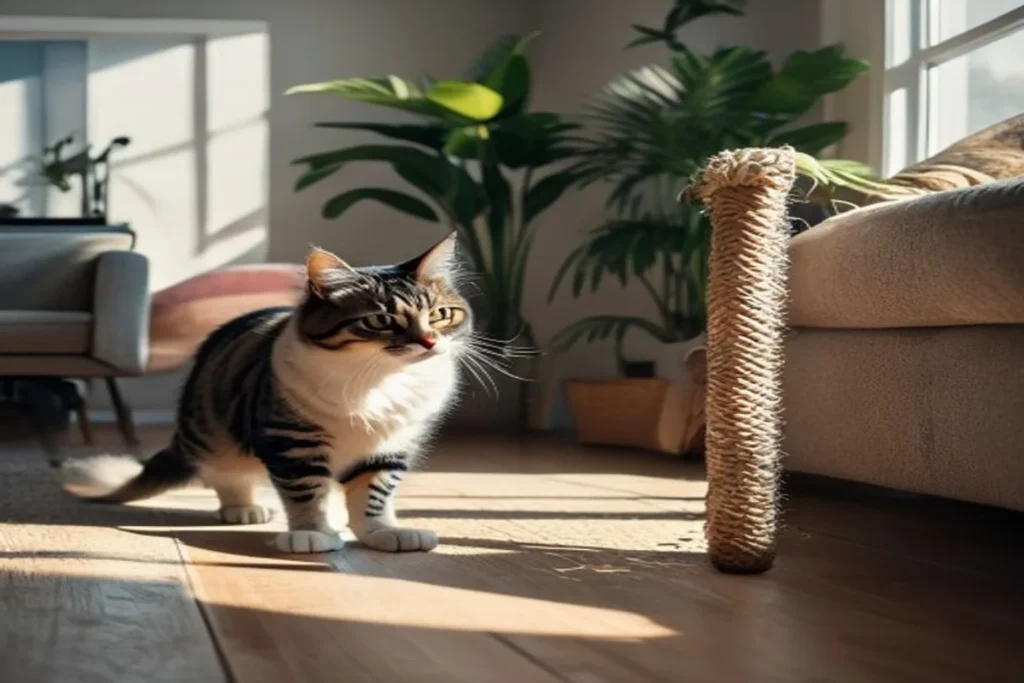
Put the scratching post right next to the furniture your cat is currently scratching. This is the most important step. Cats won’t cross the room to use a scratching post: it needs to be convenient.
Step 2: make the furniture less attractive
Cover the scratched area temporarily with double-sided tape, aluminum foil, or a plastic mat. These surfaces are unpleasant to scratch. Once your cat consistently uses the post, you can remove the deterrent.
Step 3: reward use of the post
When your cat uses the scratching post, reward it immediately with a treat or verbal praise. Never punish your cat for scratching furniture: it doesn’t understand the connection and it creates stress.
Step 4: add catnip
Rub a little dried catnip into the sisal surface. Many cats find it irresistible and will seek out the post more frequently. Not all cats react to catnip (about 30-50% don’t), but it’s worth trying.
Questions about scratching behaviour
Should I trim my cat’s claws to stop the scratching?
Regular nail trimming reduces damage but doesn’t stop the behavior. Cats will still scratch, it’s instinctive. Trimming is a good supplement to having good scratching posts, not a replacement.
My cat ignores the scratching post. What can I do?
Try a different material (sisal vs carpet vs cardboard), a different orientation (vertical vs horizontal), or a different location. Place it closer to where your cat already scratches. Some cats take time to accept a new post.
Is it ever okay to declaw a cat?
Declawing is a surgical amputation of the last bone of each toe and is considered inhumane by most veterinary organizations worldwide. It causes chronic pain and behavioral problems. There are always better alternatives.
How many scratching posts does one cat need?
At least two: one in the main living area and one in or near the bedroom. More scratching options reduce the chance of any one piece of furniture becoming a target.
My cat scratches right after waking up. Is that normal?
Very normal. Post-sleep stretching and scratching is a common cat ritual. Having a scratching post near where your cat sleeps usually solves it immediately.
Redirect it, don’t fight it
Furniture scratching is completely manageable once you accept that scratching itself is non-negotiable for cats, and focus on providing the right outlet for it. A tall, stable sisal post placed next to the problem furniture, combined with positive reinforcement, resolves most scratching issues within a few weeks. If the behavior is severe or sudden, mention it to your vet to rule out any underlying causes.