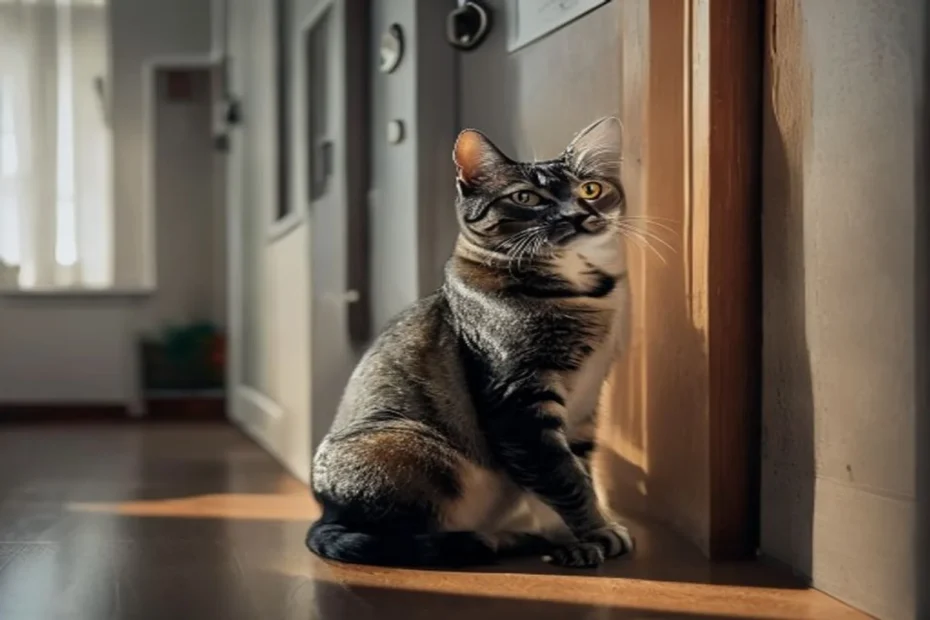
Why Cats Hate Closed Doors and What to Do About It
You’ve probably noticed: the moment you close a door in your apartment, your cat becomes intensely interested in what’s behind it. Even a room they previously ignored becomes suddenly fascinating when access is denied. This is a well-documented behavior and it says something specific about how cats experience their territory.
Understanding why it happens helps you decide whether to address it, manage it, or just live with it.
The Territory Explanation
Cats are territorial animals who actively patrol and monitor their environment. From their perspective, the entire apartment is their domain — to be surveyed, inspected, and controlled. A closed door is a portion of their territory they can no longer access or monitor.
The anxiety isn’t really about the door itself. It’s about losing surveillance access to part of their territory. They don’t know what’s behind the door, and from a feline instinct standpoint, unknown things happening in their territory are a potential threat.
Other Contributing Factors
Your presence matters
- If you’re in the closed room, the territorial instinct is compounded by the attachment instinct. A cat that’s bonded to you doesn’t just want access to the room — they want access to you. Both drivers are active simultaneously.
FOMO (Fear of Missing Out)
- Cats are highly curious and observant. A closed door suggests something interesting might be happening on the other side. Even if nothing is, the uncertainty is enough.
Routine disruption
- A door that’s usually open and suddenly closed breaks the cat’s established patrol pattern. The change itself is unsettling, separate from any concern about what’s behind it.
What You Can Do
Option 1: Don’t close doors that don’t need to be closed
- The simplest solution. In most apartments, very few internal doors need to stay closed. Letting the cat access all rooms removes the problem entirely.
Option 2: Give them the ability to come and go
- A cat door or flap in interior doors (especially bathroom doors) lets the cat maintain access while still giving you privacy when needed. These install in most interior doors without modification.
Option 3: Train a more neutral response to closed doors
- This takes weeks of consistent effort. Close the door for short periods while the cat is engaged with something else (eating, playing). Reward calm behavior when the door is closed. Gradually increase the duration. This works best started when the cat is young and the habit hasn’t fully formed.
Option 4: Accept it and redirect
- For most cats in most apartments, the door scratching happens for a few minutes and then they give up and do something else. If it’s occasional and not damaging anything, redirecting attention (a toy, their mat) right before you close the door is often enough.
Protecting Doors From Scratching
If your cat scratches at closed doors, the practical concern is door damage. Adhesive scratch guard film on the door panel protects the surface without looking bad. Carpet offcuts taped to the door base give the cat something appropriate to scratch on without rewarding the door-scratching itself.
Quick answers
Is the door obsession a sign of separation anxiety?
Not necessarily. Door obsession is typical territorial behavior for most cats. Separation anxiety is a separate issue characterized by distress (pacing, vocalizing, destructive behavior) that happens when you specifically leave the apartment, not just when a door closes. Both can coexist but they’re different patterns requiring different approaches.
My cat cries at the door for 30+ minutes. Should I be worried?
Persistent vocalization for that long is beyond typical territory curiosity and could indicate anxiety, pain, or a medical issue (hyperthyroidism causes increased vocalization in older cats). If this is new behavior or has gotten worse recently, a vet visit is worth considering to rule out a medical cause.
Will a second cat help?
Sometimes. A well-bonded pair entertains each other and the cat is less focused on your location and what’s behind doors. But a second cat also needs a careful introduction and can introduce its own complications. It’s not a guaranteed fix for door anxiety.
Practical checklist
- ☐ Identify which closed doors cause the most distress
- ☐ Consider whether those doors actually need to stay closed
- ☐ Protect door surfaces from scratching with adhesive film
- ☐ Redirect attention right before closing doors you need closed
- ☐ See your vet if vocalization is new, worsening, or occurs in an older cat
Common mistakes
- Opening the door immediately when the cat scratches or cries — this rewards the behavior and makes it more persistent.
- Punishing the cat for door scratching, which adds stress without teaching an alternative.
- Ignoring escalating door distress as “just being a cat” when it might have a medical component.
Conclusion
Cats and closed doors are a natural mismatch. It’s not stubbornness or spite — it’s territorial instinct. For most apartment owners, the simplest solution is leaving internal doors open when possible. For the doors that need to stay closed, redirecting attention before closing and protecting surfaces from scratching handles the practical concerns. Persistent intense distress is worth discussing with a vet.
You might also like
- Why Does My Cat Knock Things Off the Table? The Real Reason
- How to Stop Your Cat from Waking You Up at Night
- How to Manage Separation Anxiety in Dogs and Cats
FAQ
Does closing the bedroom door at night cause cats distress?
For most cats, yes initially — but they adapt, usually within 1-2 weeks of a consistent new rule. The first few nights may involve scratching and complaining at the door. If you stay consistent and don’t open the door in response to the noise, most cats eventually give up and find somewhere else to sleep. The key is not responding during the adjustment period.

Jamie Cole is a content creator focused on practical pet care for apartment living. At NestPath, Jamie shares straightforward guides on cat and dog care, pet behavior, and making small spaces work for both owners and their animals. The goal is clear, judgment-free advice for everyday pet owners who just want to do right by their pets.