The Best Litter Box Setups for Small Apartments
In this article
The Best Litter Box Setups for Small Apartments
Finding the right litter box setup when you’re working with limited space is one of the real challenges of having a cat in an apartment. The box needs to be accessible for your cat, manageable for you to clean, and ideally not dominating the visual space of your bathroom or closet.
The good news: there are setups that genuinely work well for small spaces, and the “right” one depends more on your cat’s habits than on the size of your apartment.
Key Rules Before Choosing a Setup
One litter box per cat, plus one extra. So one cat needs two boxes, ideally in different locations. In a small apartment, “different locations” might just mean different corners of the bathroom, and that’s fine.
Cats won’t use a box that smells bad. Scooping daily is non-negotiable regardless of the box type or location.
Litter Box Options That Work in Small Apartments
1) Top-entry litter boxes
- Why it works: The opening is on top instead of the front. This contains litter scatter dramatically and reduces odor because the box has a lid on all four sides. The cat jumps in from the top, does its business, and jumps out. Litter that sticks to their paws tends to fall back in rather than onto the floor.
- Best for: Cats that are good jumpers and don’t have mobility issues. Not ideal for kittens, seniors, or cats with arthritis.
- Common mistake: Placing it in a corner where the cat can’t get a running approach to jump in. Needs enough open space above for the cat to enter comfortably.
2) Covered boxes with a swinging door
- Why it works: Contains odor well and reduces scatter. Many cats prefer the privacy. The swinging door stops the smell from escaping.
- Best for: Cats that don’t mind enclosed spaces and won’t get scared by the door movement. Some cats refuse to use covered boxes. Try one with the door removed first to see if they accept it.
- Common mistake: Buying a small covered box for a large cat. The cat needs to be able to turn around fully inside without touching the walls.
3) Furniture-integrated litter boxes
- Why it works: These are cabinets or side tables with a hidden interior space for the litter box. From the outside, they look like regular furniture. Works well in apartments where the litter box would otherwise be in plain view in a living area.
- Best for: People who want the box accessible but invisible in a studio or open-plan apartment.
- Common mistake: Buying one that’s too small inside for the litter box and a comfortable turning radius for the cat.
4) Self-cleaning automatic boxes
- Why it works: Scoops automatically after each use, reducing the buildup of waste and odor between your manual cleaning sessions. For people who work long hours, this can be a significant quality-of-life improvement for both owner and cat.
- Best for: Busy owners who struggle with daily scooping. Takes an upfront investment but reduces daily maintenance.
- Common mistake: Assuming the self-cleaning replaces regular maintenance entirely. You still need to empty the waste compartment and clean the full unit regularly.
Where to Put It in a Small Apartment
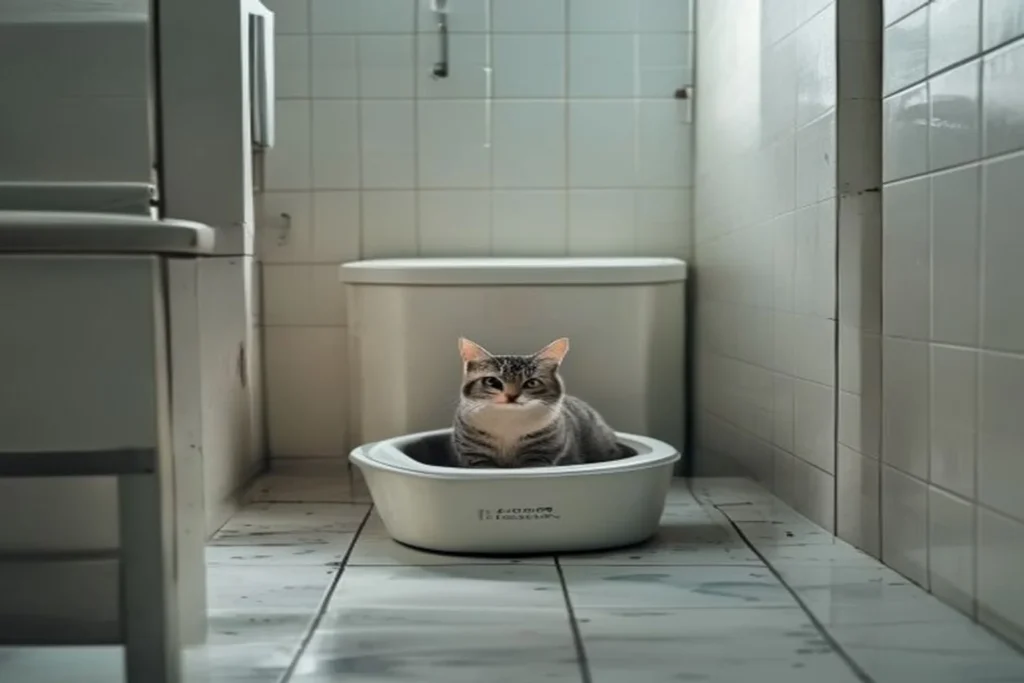
Bathroom is the most common location and it works well. Under the sink, in the corner near the toilet, or even inside a cabinet with a cat door cut in. Avoid high-traffic areas and spots near food and water bowls: cats won’t eat near their litter area.
A closet with a cat door cut in is an excellent option for open-plan apartments. The box stays out of sight and the smell stays contained.
Litter box setup questions
How often should I scoop the litter box?
Once per day minimum. In a small apartment without good ventilation, twice a day keeps the smell manageable. Cats that find the box too dirty will start avoiding it, which usually means finding somewhere else to go.
What litter is best for controlling odor in a small apartment?
Clumping clay litter or clumping tofu/plant-based litter tend to control odor best when scooped daily. Silica gel litter also works well and produces less dust. Avoid heavily scented litters: they often don’t mask the smell and can put sensitive cats off using the box.
Can I put the litter box in a living area?
Yes, especially if it’s inside a furniture piece. Place it somewhere your cat can access without going through high-traffic zones and without it being directly visible from the main seating area.
What size litter box does my cat need?
At minimum, the box should be 1.5 times the length of your cat from nose to base of tail. Most standard boxes are sized for average cats. Large breeds (Maine Coon, Norwegian Forest Cat, large males) need XL boxes. When in doubt, go bigger: cats prefer more space, not less.
Quick checklist
- ☐ Get one box per cat plus one (two boxes for one cat)
- ☐ Choose a box type based on your cat’s mobility and preferences
- ☐ Scoop daily, clean fully once a week
- ☐ Place boxes away from food and water bowls
- ☐ Consider a furniture-integrated solution if the box is in a visible area
The usual missteps
- Having only one box for one cat in a larger apartment, making it too far for urgent trips.
- Choosing a box that’s too small for the cat to turn around in.
- Putting the box directly next to food bowls.
Size and placement decide everything
The best litter box setup for your apartment is the one your cat will actually use consistently. Start with something accessible and well-located, keep it scrupulously clean, and adjust from there if you have scatter or odor issues. Most problems with litter box avoidance trace back to cleanliness or location, not the box type itself.