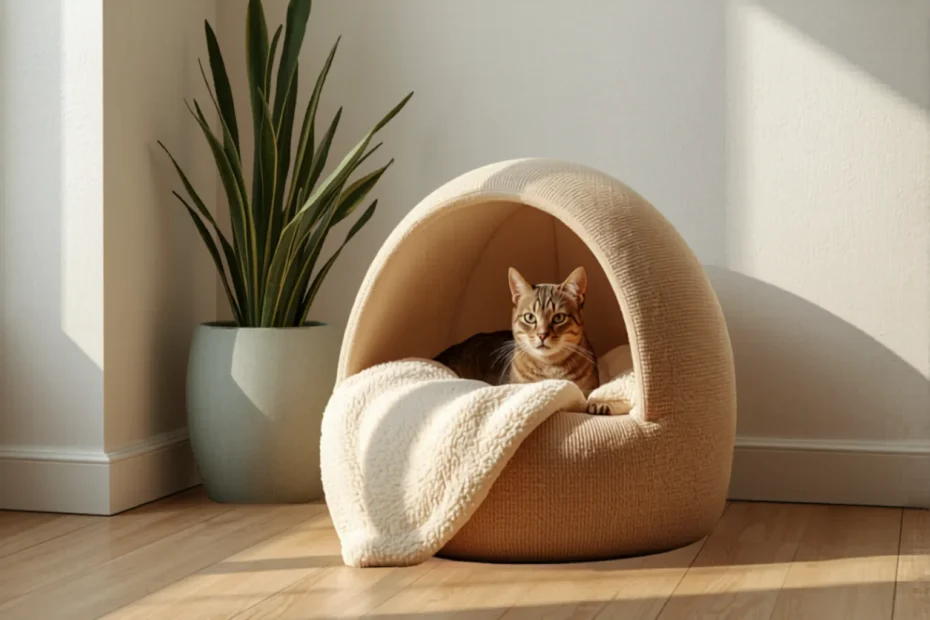
When a pet gets anxious, their instinct is to hide. But in a small apartment, there’s often nowhere safe to retreat, so the stress has nowhere to go. Giving your pet a dedicated hideaway changes that.
A calm, enclosed spot of their own helps an anxious cat or dog self-soothe during storms, guests, noise, or just an overwhelming day. And it barely takes any space.
Here’s how to create a calm hideaway for an anxious pet in a small apartment.
Key idea: A small, enclosed, quiet retreat gives an anxious pet a place to calm down on their own, which a busy apartment otherwise lacks.
Quick summary (for busy people)
- Anxious pets need a safe spot to retreat to
- Enclosed and quiet beats open and exposed
- Use a corner, a covered bed, or under furniture
- Let your pet choose to use it; never force them
Why a hideaway calms an anxious pet
Hiding is a natural coping behavior. An enclosed space makes a pet feel protected and in control, which lowers stress when the world feels overwhelming.
In a small apartment, there’s usually no closet to slip into or quiet room to escape to. Without a retreat, an anxious pet has no way to settle, so the anxiety lingers and can get worse.
Creating one intentional hideaway gives them that missing tool, in a footprint smaller than a chair.
How to set up a calm hideaway
1) Pick a quiet, low-traffic spot
- Why it works: A calm location away from foot traffic and noise feels safe to a stressed pet.
- How to do it: Choose a corner, a spot under a side table, or a quiet nook away from the door and the busiest part of the home.
- Common mistake: Placing the hideaway in a high-traffic area, which defeats the purpose.
2) Make it enclosed and cozy
- Why it works: An enclosed feel mimics a den, which is naturally soothing.
- How to do it: Use a covered bed, a crate with a blanket over it, a cardboard box on its side, or a cat cave, lined with something soft.
- Common mistake: Offering an open, exposed bed in the middle of the room, which doesn’t provide that protected feeling.
3) Add comfort and familiar scent
- Why it works: Familiar smells and softness make the spot feel secure and theirs.
- How to do it: Add a soft blanket and maybe an item that smells like you. For some pets, a calming pheromone product nearby helps too.
- Common mistake: Washing away all familiar scent or constantly moving the hideaway around.
Quick answers
How do I create a safe space for an anxious pet in a small apartment?
Pick a quiet, low-traffic corner and add an enclosed, cozy spot like a covered bed or a crate with a blanket, lined with something soft and familiar. Let your pet use it by choice.
Where should an anxious pet’s hideaway go?
Somewhere quiet and away from the door and busy areas. A corner, under a table, or a tucked-away nook works well, even in a tiny apartment.
What happens if an anxious pet has no place to hide?
Their stress has no outlet, so they can’t self-soothe. Anxiety may persist or worsen, sometimes showing up as hiding in unsafe spots, accidents, or destructive behavior.
Practical checklist
- Choose a quiet, low-traffic location
- Make the spot enclosed, like a covered bed or box
- Line it with something soft
- Add a familiar-smelling item
- Let your pet enter and leave freely
Common mistakes
- Putting the hideaway in a busy area.
- Using an open, exposed bed instead of an enclosed one.
- Forcing your pet into the spot instead of letting them choose it.
Pro tip
Never use the hideaway as a place to grab or remove your pet from. It has to stay a guaranteed safe zone. If your pet learns they get pulled out of it, they’ll stop trusting it, and the whole point is lost.
Conclusion
An anxious pet needs somewhere to retreat, and a small apartment rarely offers it by default. A quiet corner, an enclosed cozy spot, and a familiar scent give them a tool to calm themselves.
Set up one small hideaway this week and let your pet discover it. Having a safe place to go makes a real difference on stressful days.
Related posts
- How to Set Up a Comfortable Space for Your Cat in a Small Apartment
- How to Pet-Proof a Small Apartment Without Major Changes
- How to Set Up a Pet Feeding Station in a Small Kitchen
FAQ
Does a hideaway work for both cats and dogs?
Yes. Cats often like elevated or covered spots, while dogs tend to prefer a den-like crate or covered bed. The principle, an enclosed quiet retreat, works for both.
My pet’s anxiety seems severe. Is a hideaway enough?
A hideaway helps, but severe or worsening anxiety deserves a vet’s input. They can rule out medical causes and suggest behavior strategies or other support.
Should I comfort my pet when they hide?
Let them retreat without pressure. Calm, low-key reassurance is fine, but don’t pull them out or fuss over them, which can add stress. The point is letting them settle on their own.

Jamie Cole is a content creator focused on practical pet care for apartment living. At NestPath, Jamie shares straightforward guides on cat and dog care, pet behavior, and making small spaces work for both owners and their animals. The goal is clear, judgment-free advice for everyday pet owners who just want to do right by their pets.