How to Crate Train a Dog in a Small Apartment
In this article
Crate training in a small apartment sounds counterintuitive. Why add a box when you barely have room as it is? But a crate, done right, becomes your dog’s safe den and one of the most useful tools you have in a tight space.
The key is making the crate a positive place, never a punishment, and choosing a setup that fits both your dog and your floor plan.
Here’s how to crate train a dog in a small apartment.
Key idea: A crate works in a small apartment when it’s introduced positively and treated as your dog’s safe retreat, not a cage.
Quick summary (for busy people)
- The crate should feel like a den, not a punishment
- Introduce it slowly with treats and meals
- Pick the right size: enough to stand, turn, and lie down
- Never use the crate to punish your dog
Why a crate helps in a small space
Dogs are den animals. A properly introduced crate gives your dog a safe, cozy spot of their own, which matters even more in a small apartment where there’s nowhere else to retreat.
It also helps with house training, keeps your dog secure when you’re out, and gives them a calm place during noisy or stressful moments. In a tight space, that structure benefits both of you.
The whole approach depends on one rule: the crate is always a good place, never a consequence.
How to crate train step by step
1) Choose the right crate and spot
- Why it works: A crate that’s the right size and in a calm spot feels secure, not cramped or exposed.
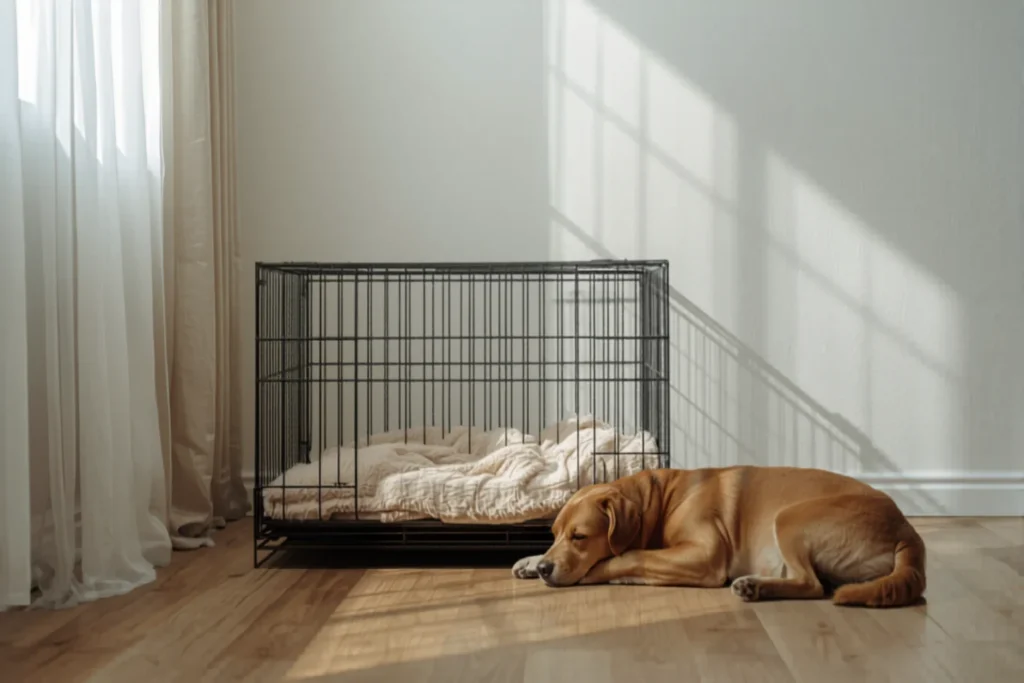
- How to do it: Pick a crate big enough for your dog to stand, turn around, and lie down, and place it in a quiet corner out of the main traffic.
- Common mistake: Getting a crate far too big, which undermines the cozy den feeling, or placing it in a loud, busy spot.
2) Introduce it with positives
- Why it works: Pairing the crate with good things teaches your dog it’s a place they want to be.
- How to do it: Leave the door open at first, toss treats inside, and feed meals in the crate so your dog enters on their own.
- Common mistake: Forcing your dog in and shutting the door right away, which creates fear instead of comfort.
3) Build up time gradually
- Why it works: Slowly increasing crate time prevents anxiety and builds a calm association.
- How to do it: Start with short periods while you’re home, then slowly extend the time and practice leaving the room.
- Common mistake: Crating your dog for long stretches before they’re comfortable, which can cause distress.
Crate training questions
How do I crate train a dog in a small apartment?
Choose a right-sized crate in a quiet corner, introduce it with treats and meals so your dog enters willingly, and build up crate time gradually. Always keep it a positive space.
Is it cruel to crate a dog in a small space?
No, when done correctly. A crate gives your dog a safe den of their own, which is comforting, especially in a small apartment. It becomes cruel only if used as punishment or for excessive time.
How long can a dog stay in a crate?
It depends on age and training, but no dog should be crated for very long stretches. Puppies need frequent breaks. When in doubt, ask your vet or a trainer for guidance.
What size crate should I get?
One where your dog can stand up, turn around, and lie down comfortably. For a growing puppy, get the adult size and use a divider to adjust the space as they grow.
Should I cover the crate?
A light cover can make the crate feel more den-like and cozy for some dogs. Make sure there’s still airflow, and skip it if your dog seems to prefer an open view.
My dog whines in the crate. What do I do?
Go back to shorter sessions and more positive associations, and avoid letting them out right when they whine, which can reinforce it. If whining is intense, a trainer can help.
Your checklist
- Pick a crate sized to stand, turn, and lie down
- Place it in a quiet, low-traffic corner
- Use treats and meals to introduce it
- Leave the door open at first
- Increase crate time gradually
Mistakes to avoid
- Using the crate as punishment.
- Forcing your dog in and locking the door too soon.
- Crating for long stretches before your dog is ready.
Pro tip
In a small apartment, choose a crate that doubles as furniture. A sturdy crate with a flat top can serve as a side table or stand, so it earns its footprint instead of just taking up space.
The crate is a bedroom, not a punishment
A crate can be a gift in a small apartment, giving your dog a safe den and you some structure. Right size, quiet spot, positive introduction, and gradual time are all it takes.
Start by setting up the crate with the door open and a few treats inside. Let your dog explore it on their own terms, and the rest builds from there.