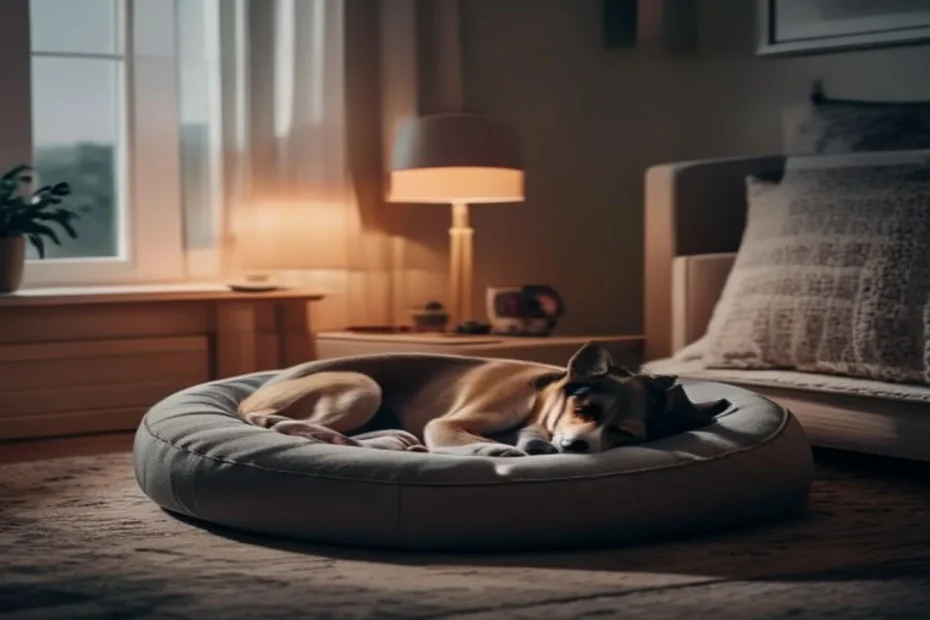
Your dog gets the zoomies at 10 p.m. Or barks at every sound after midnight. Or wakes you up at 5 a.m. needing the bathroom. Apartment life with a dog is great until the sleep schedule starts breaking down.
A calm bedtime routine fixes most of this. Not magic, not training secrets. Just a consistent sequence of cues that tells your dog the day is winding down. Here’s how to build one that works in 200 square feet or 2,000.
Why apartment dogs especially need a bedtime routine
Dogs in apartments don’t burn the same kind of energy as backyard dogs. They don’t patrol fences, they don’t chase squirrels through the morning, they don’t sniff the same patch of grass at 9 a.m. and 4 p.m. Their stimulation comes in concentrated walks and indoor play, which means their brains can stay revved up at the end of the day.
A predictable wind-down sequence helps an apartment dog shift from “alert mode” to “rest mode.” Without it, they stay vigilant. Every footstep above, every elevator ding, every car door becomes a reason to bark or pace.
Building a calm bedtime routine for your apartment dog isn’t about training tricks. It’s about creating signals so reliable that their body starts shutting down on cue.
The five-step bedtime sequence
1) Last meal timing matters
Feed dinner 3 to 4 hours before bedtime. Eating too close to sleep means digestion is happening when they’re supposed to be resting, plus a full bladder midway through the night. Adjust portion size with vet guidance if your dog tends to wake up hungry early.
If your dog is on two meals a day, dinner around 6 to 7 p.m. works well for an 11 p.m. bedtime. Late-night treats? Skip them or keep them tiny.
2) The “last call” potty break
Take your dog out for their final walk 30 to 45 minutes before bed. Keep it short (10 to 15 minutes), not a full energy walk. The goal is to empty the bladder, not stimulate the brain.
Walk the same route every night. Familiar smells, familiar pace, familiar return path. Repetition is calming.
3) Active wind-down (15 minutes of brain work)
Counter to intuition, asking your dog to do a small mental task before bed often calms them faster than ignoring them. Try a puzzle feeder, a quick training session of 3 to 5 cues they already know, or a chew toy that requires focus.
The point is to engage their problem-solving brain briefly, which makes them tired in a different way than physical play does. Physical play before bed tends to wind them up, not down.
4) Quiet decompression (15 minutes)
After the small task, sit with your dog for about 15 minutes with low lighting, low TV (or silence), and slow, calm movements. Pet them slowly if they enjoy it. Avoid roughhousing, eye-catching screens, or excited voices.
This is when their nervous system actually transitions from “engaged” to “drowsy.” Most owners skip this step and wonder why their dog is still alert when they try to crate or settle them.
5) The exact same end cue every night
Pick a phrase (“bedtime,” “time for bed,” “let’s settle”) and use only that phrase, in the same tone, every single night. Combine it with the same physical action (turning off the lamp, leading them to their bed or crate, giving a final small treat).
Within a week or two, the cue itself starts triggering the calm response. Your dog hears the phrase, sees the lamp click off, and their body starts shutting down before they even reach the bed.
Quick answers
What’s the best bedtime routine for an apartment dog?
A 5-step sequence: early dinner, short potty walk, 15 minutes of mental enrichment, 15 minutes of quiet decompression, and a fixed verbal cue with consistent end-of-day actions. Same order, every night.
How often should you stick to the bedtime routine?
Every single night for at least 3 weeks to establish the habit. After that, the routine becomes automatic for your dog, even if you occasionally vary it.
What happens if you skip the routine?
One night is usually fine. Multiple nights and you’ll see the regression: pacing at night, midnight barking, harder time settling. Dogs find safety in predictability.
Setting up the sleep space
The right bed location
Place the dog bed in a low-traffic part of your apartment, away from windows facing busy streets, hallways or stairwells with foot traffic, and any spot where they can see the door clearly.
Some dogs prefer to sleep near you (bedroom, foot of your bed). Others prefer a separate quiet corner. Test both and observe which feels right for your dog. There’s no universal answer.
Block startling sounds
Apartment buildings produce constant low-level noise. A white noise machine, a fan, or even soft instrumental music can mask the sudden sounds that wake up alert dogs. Most dogs sleep deeper with consistent background noise than in total silence.
Temperature and bedding
Dogs sleep better slightly cooler than humans. If your apartment runs warm, place their bed away from heat sources. A bed with raised edges helps anxious dogs feel more secure (“curl pose” beds often outperform flat mats).
Common bedtime problems and fixes
- Dog wakes at 5 a.m. wanting out. Move the last potty break later (closer to 11 p.m.), reduce evening water slightly (with vet approval), and skip late-night treats.
- Dog barks at every sound. Add white noise. Move bed away from the entry door. Some dogs need a covered crate to mute external stimuli.
- Dog won’t settle and paces. They probably need more daytime exercise or mental enrichment. The bedtime routine alone can’t fix an underexercised dog.
- Dog has separation anxiety at bedtime. Start the routine with the dog beside you, then gradually move the bed to its target location over a week.
Pro tip
Track your dog’s behavior for the first 7 days of the new routine in a simple notes app. Just two lines a night: “What time did they settle?” and “Did they wake during the night?” By day 7, the pattern shows you what’s working and what to adjust. Without tracking, you’ll think nothing is changing when actually it’s gradual.
Conclusion
Apartment dogs thrive on predictability. The bedtime routine isn’t extra work, it’s the structure that makes the rest of apartment life easier. Sleep better, wake up calmer, less midnight chaos. The routine pays off within two weeks.
Start tonight with the simplest version: dinner earlier, short last walk, quiet 15 minutes before bed, same verbal cue. Add the other steps once those become natural. Within a month, you’ll wonder how you lived without it.
You might also like
FAQ
Should my dog sleep in my bed or in their own?
Either works. The key is consistency. Pick one and stick to it. Switching back and forth confuses the routine and often makes settling harder.
What if my dog is a puppy?
Puppies need more potty breaks, especially under 4 months. Adjust the last potty walk closer to bedtime and be ready for one middle-of-night break. The rest of the routine still applies.
Do older dogs need a different routine?
Older dogs often benefit from slightly earlier bedtimes and more decompression time. They tire faster but also have a harder time settling. Add 5 extra minutes to the quiet wind-down step.
Can a bedtime routine help with anxiety?
It helps with mild anxiety significantly. Severe separation or noise anxiety usually needs additional support, possibly from a vet behaviorist. The routine is foundation, not cure.

Jamie Cole is a content creator focused on practical pet care for apartment living. At NestPath, Jamie shares straightforward guides on cat and dog care, pet behavior, and making small spaces work for both owners and their animals. The goal is clear, judgment-free advice for everyday pet owners who just want to do right by their pets.