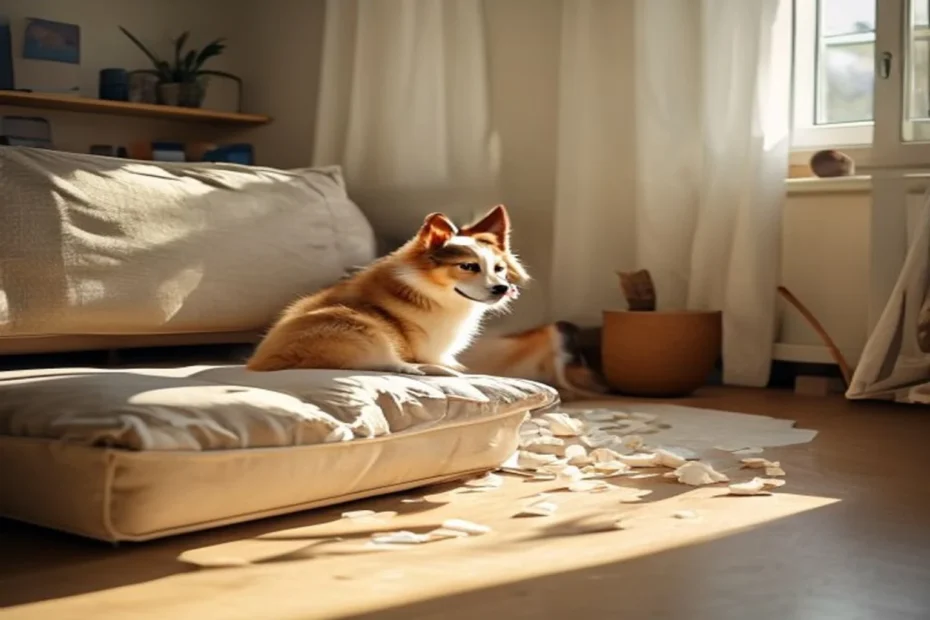
You leave for an hour. You come home to a shredded cushion, a chewed shoe, and a guilty-looking dog hiding behind the couch. If your dog destroys things when left alone, you are not dealing with a “bad” dog. You are dealing with a dog who is trying to tell you something.
In an apartment, this kind of damage hits fast. There is less space, more shared walls, and neighbors who notice the noise. The good news is that most destructive behavior has a clear cause, and once you find it, you can usually fix it.
Let’s walk through why it happens, how to tell the difference between boredom and real distress, and what you can actually do about it.
Why your dog destroys things when left alone
When a dog wrecks the place while you are out, the behavior almost always falls into one of two buckets: boredom or anxiety. They look similar from the outside, but they need very different fixes.
A bored dog has too much energy and nothing to do. Chewing the table leg is just entertainment. An anxious dog, on the other hand, is genuinely stressed about being alone. The chewing, digging, or scratching is a way to cope with panic, not a way to pass the time.
Getting this part right matters. If you treat anxiety like boredom, more toys will not help. If you treat boredom like anxiety, you might miss the simple fix: your dog just needs more exercise and stimulation.
The most common reasons behind the damage
Here are the usual culprits. Most dogs have more than one of these going on at the same time.
Pent-up energy
This is the big one in apartments. A dog who has not had a real walk or play session is loaded with energy. When you leave, that energy goes somewhere, and usually that somewhere is your furniture. Tiring your dog out before you go is often half the solution. If you are not sure how much movement your dog needs, our guide on how much exercise your dog really needs indoors breaks it down by size and age.
Separation anxiety
Some dogs panic the moment they are alone. The signs go beyond chewing: pacing, drooling, nonstop barking or howling, scratching at doors and windows, or having accidents even though they are house-trained. The damage is often near exits, because the dog is trying to follow you. This is real distress, and it usually needs a slow, patient plan rather than a quick fix.
Boredom and lack of stimulation
A dog’s brain needs a job. Without puzzles, chews, or things to sniff, the day stretches out into nothing. Destruction becomes the most interesting activity available. Mental work tires a dog out just as much as physical exercise does, sometimes more.
Teething or age
Puppies chew because their mouths hurt and the world is new. This phase passes, but during it, chewing is normal and even necessary. The goal is to redirect it onto things they are allowed to destroy, not to stop it cold.
It worked before
Dogs repeat what gets a reaction. If chewing the remote once led to you rushing over, talking, and giving attention, your dog learned that destruction brings you back. Even scolding can feel like a reward to a dog who just wants you near.
Quick answers
Is my dog destroying things out of spite or revenge?
No. Dogs do not feel spite the way people imagine. The “guilty look” is a reaction to your body language, not an admission of guilt. The behavior comes from energy, stress, or habit, never payback.
How can I tell boredom from separation anxiety?
Boredom damage is scattered and casual. Anxiety damage clusters near doors and windows and comes with panic signs like drooling, pacing, or constant howling. A pet camera while you are out makes the difference obvious.
Will getting a second dog fix it?
Sometimes, but not reliably. A second dog can ease boredom, but a truly anxious dog is often attached to you specifically, not just to having company. Another dog can even pick up the same habits.
How long can I leave my dog alone?
Most adult dogs handle four to six hours fine once they are settled. Puppies need much shorter stretches. If your dog cannot manage even a few minutes calmly, that points to anxiety rather than time.
What actually helps
Once you know the cause, the fixes are practical. Try these and give each a couple of weeks before you judge it.
- Exercise before you leave. A brisk walk or a hard play session burns energy and helps your dog rest while you are gone.
- Give an outlet. A stuffed chew toy or a food puzzle keeps the mouth and brain busy. Save a special one only for alone-time so it feels worth waiting for.
- Shrink the space. A crate or a single safe room limits the damage and often calms the dog. If you go this route, do it gently so the space feels safe, not like a punishment. Our guide to crate training in a small apartment covers the steps.
- Practice short departures. Leave for two minutes, then five, then ten. Slowly stretching the time teaches your dog that you always come back.
- Keep arrivals and exits boring. No big goodbyes, no dramatic hellos. Low-key comings and goings tell your dog that leaving is no big deal.
- Set up a hideaway. A quiet, cozy spot can lower stress for an anxious dog. See how to create a calm hideaway in a small apartment for ideas.
A common mistake is punishing your dog after the fact. By the time you find the mess, your dog has no idea what you are upset about. Scolding only adds stress and can make anxiety worse. Redirect, manage the space, and reward the calm behavior you do want.
If the destruction comes with heavy drooling, injuries from chewing at doors, or signs your dog is hurting itself to escape, talk to your vet or a certified trainer. Severe separation anxiety is treatable, and a professional can build a plan that fits your dog. Your vet can also rule out any health issue hiding behind the behavior.
Conclusion
Your dog is not breaking your stuff to get back at you. The damage is a signal: too much energy, too much stress, or too little to do. Watch the pattern, figure out whether it is boredom or anxiety, and match the fix to the cause. Start with one change today, a longer walk before you leave or a special chew toy saved for alone-time, and build from there. If the panic signs are strong or nothing seems to help, consult your vet to rule out a health cause and get a plan that works for your dog.
You might also like
- Why Your Dog Whines and What It’s Trying to Tell You
- How to Crate Train a Dog in a Small Apartment
- How to Create a Calm Hideaway for an Anxious Pet
FAQ
Why does my dog only destroy things when I am gone?
Because your presence keeps your dog calm and occupied. When you leave, energy or stress builds with no outlet, and chewing becomes the release. Address the cause and the alone-time damage usually fades.
What is the safest thing to give my dog to chew instead?
Sturdy rubber toys you can stuff with food, or vet-approved chews sized for your dog. Avoid anything that splinters or can be swallowed whole. Check with your vet if you are unsure what is safe.
Can destructive behavior ever just go away on its own?
Puppy teething usually passes with age. Boredom and anxiety rarely fix themselves without a change on your end. The earlier you adjust the routine, the faster the behavior settles.

Jamie Cole is a content creator focused on practical pet care for apartment living. At NestPath, Jamie shares straightforward guides on cat and dog care, pet behavior, and making small spaces work for both owners and their animals. The goal is clear, judgment-free advice for everyday pet owners who just want to do right by their pets.