How to Hide Pet Supplies Without Buying Extra Furniture
In this article
How to Hide Pet Supplies Without Buying Extra Furniture
Pet supplies take up a surprising amount of space: bags of food, treats, toys, grooming tools, leashes, carriers, medications, and the various accessories that accumulate over a pet’s lifetime. In a small apartment, keeping all of that organized without it taking over the visual space requires a bit of strategy.
The goal is to integrate pet storage into what you already have, rather than buying dedicated pet furniture that competes with your existing setup.
Integrating Pet Storage Into Existing Spaces
Use a kitchen cabinet for food and treats
- Why it works: Dog and cat food belongs in a kitchen cabinet, not on the floor in a corner. Same storage principles apply: keep it away from heat sources and in a sealed container to preserve freshness and control odor.
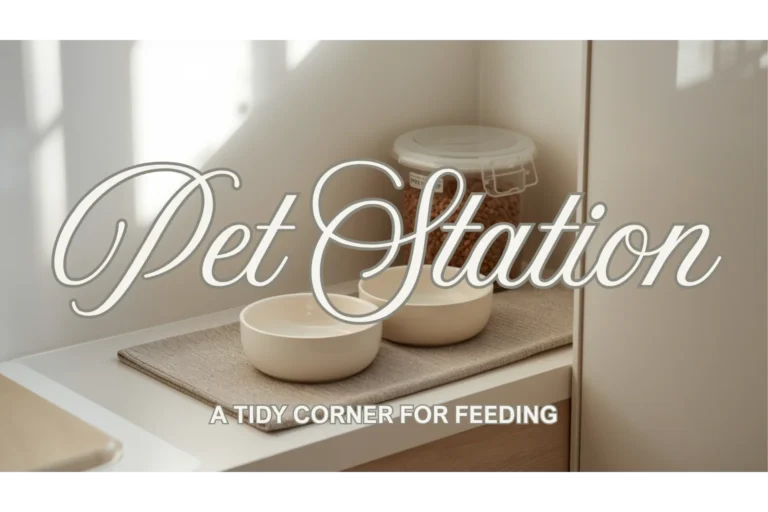
- How to do it: Decant bulk dry food into an airtight container that fits in a lower cabinet. The container takes no more space than a bag, looks better, and keeps the food fresh longer. Treats go in a smaller sealed jar or container on the same shelf.
- Common mistake: Leaving the large original bag on the floor taking up visual space and spreading smell through the apartment.
Repurpose a closet shelf for the carrier and bulky items
- Why it works: Pet carriers, extra beds, seasonal toys, and backup supplies are low-frequency items that shouldn’t take up daily living space.
- How to do it: Dedicate one shelf in a closet to pet items. The carrier goes there between vet visits. Seasonal toys go in a labeled bag or bin on that shelf. Backup food, extra treats, and grooming tools that aren’t used daily all live here.
- Common mistake: Keeping the carrier out permanently “because it takes too long to get out of the closet.” Getting it out 4-6 times a year is worth the visual clarity of the rest of the time.
Put the toy collection in a basket near the pet’s main area
- Why it works: Toys scattered everywhere are the messiest visual element of pet ownership. One contained basket or bin keeps them accessible but organized.
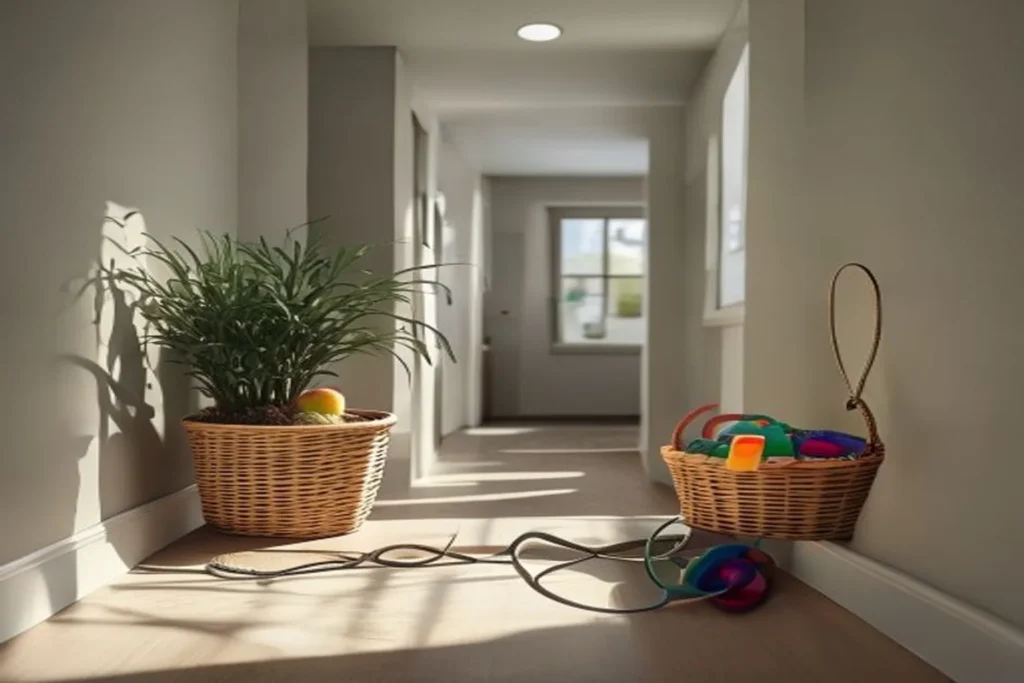
- How to do it: A wicker basket, canvas bin, or simple fabric box near the pet’s sleeping area holds the daily toy rotation. Keep 3-5 toys in the basket; rotate others in and out of the closet every few days. The basket looks intentional and blends with home decor better than loose toys on the floor.
- Common mistake: Keeping every toy the pet owns accessible at once. Pets interact more with toys when there are fewer options.
Mount leashes and collars near the door
- Why it works: Leashes hanging on a hook near the exit are both functional and visually contained. Much better than leashes draped over chairs or piled in a drawer.
- How to do it: A small row of hooks near the apartment door handles leashes, collars, harnesses, and a bag dispenser. A small tray below catches the waste bags and anything else. It’s the pet equivalent of a key hook, simple and contained.
- Common mistake: Multiple leashes hanging without a backup hook when only one is in use. Keep it simple: one primary hook, one backup.
Use under-bed storage for backup supplies
- Why it works: Backup bags of food, litter (if you have a cat), and seasonal items can live under the bed in flat storage boxes without taking up any living space.
- How to do it: Flat vacuum-seal bags or low-profile storage boxes under the bed handle the bulk. Label them clearly so you know what’s there without digging.
- Common mistake: Storing things under the bed that the pet also accesses and treats as a toy or chew target.
Hiding supplies without new furniture
Where should I store litter and litter accessories in a small apartment?
A sealed container for fresh litter in the bathroom or a nearby closet works well. The litter scoop can hang on a hook directly on the side of the litter box cabinet (many designs accommodate this). A small bag for used litter goes in a dedicated spot near the box to eliminate trips to the trash between scoops.
How do I manage the smell of food and treats in the kitchen?
Airtight containers solve most of this. Dry pet food has a distinct smell that permeates paper and plastic bags. A sealed container with a lid that locks is the only reliable solution. Store treats in a glass jar with a tight lid: no smell escapes, and they stay fresher longer.
Is there any pet storage solution that looks good without being “pet-themed”?
Yes. Most regular home storage products work perfectly for pet supplies: wicker baskets, canvas boxes, glass jars, plain wooden hooks. You don’t need paw-print branded products. A neutral wicker basket that holds pet toys is just a wicker basket to anyone visiting.
How do I store a large bag of cat litter in a small apartment?
Decant it into a sealed container the same way you would dog food. A 10-liter airtight bin fits most litter needs for a month and takes up less visual space than a giant paper bag in the corner. Store it in the bathroom or nearest closet to the litter box to minimize carrying.
Quick checklist
- ☐ Decant dry food into an airtight container and store in a kitchen cabinet
- ☐ Dedicate one closet shelf to the carrier, backup supplies, and seasonal items
- ☐ Put a basket near the pet’s area for the active toy rotation
- ☐ Install hooks near the door for leashes and collars
- ☐ Use under-bed storage for bulk backup items
What not to do
- Keeping everything out at once instead of using a rotation system for toys and supplies.
- Leaving pet food in the original bag on the floor rather than decanting to a sealed container.
- Buying dedicated “pet furniture” before using the storage capacity already available in the apartment.
Containment over storage
Pet storage in a small apartment is mostly an organization problem, not a space problem. Decanting food, using one closet shelf intentionally, rotating toys through a basket, and hanging leashes by the door handle 90% of what most pet owners deal with daily. None of these require buying new furniture or changing your apartment’s layout.