How to Use Vertical Space to Make Your Apartment More Pet-Friendly
In small apartments, floor space is limited. But vertical space — walls, the area above furniture, even doorways — is almost always underused. For pet owners, especially cat owners, vertical space is the secret to making a small apartment feel more like a multi-room home.
This guide covers practical ways to add vertical pet-friendly elements without major renovations.
Why vertical space matters for pets
For cats: territory and escape routes
Cats are naturally climbers. In the wild, they spend significant time elevated — on rocks, branches, or above ground predators. Indoor cats have the same instinct. Vertical access lets them survey their territory, escape stress, and feel safe.
A cat in a small apartment without vertical space is like a person living in a single-floor space without windows. It’s livable, but limited.
For dogs: less direct benefit, but still useful
Dogs don’t typically use elevated spaces the way cats do. But vertical storage for their supplies, food, and toys frees up floor space for them to move around. Indirectly important.
Vertical solutions for cats
Cat trees
The classic solution. Multi-level cat trees give your cat climbing options, scratching surfaces, and elevated rest spots in one piece of furniture. Choose ones tall enough to clear most furniture and stable enough not to wobble.
Place near a window if possible — combines verticality with the enrichment of watching outside.
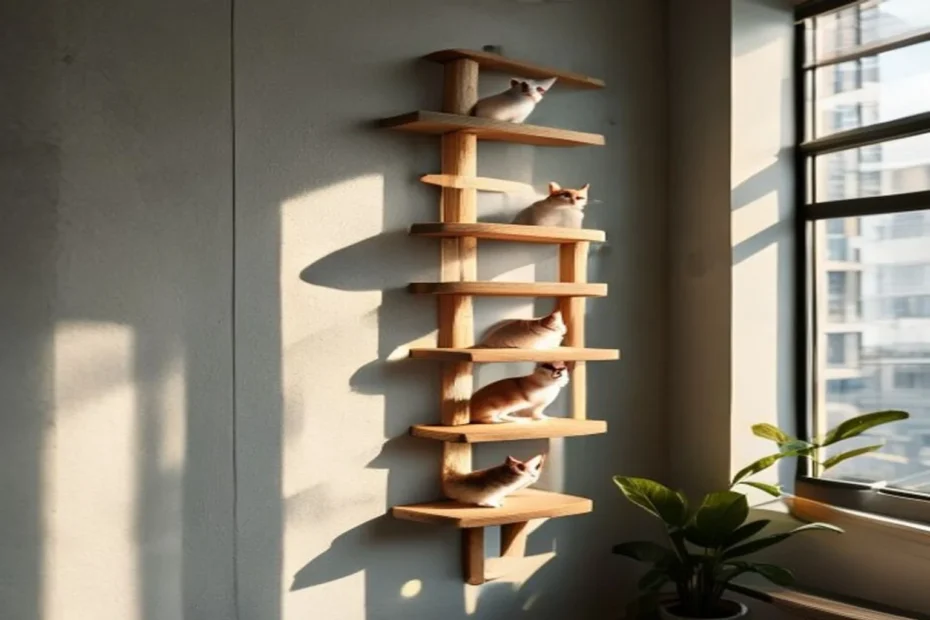
Wall-mounted cat shelves
Series of shelves at different heights creates a “cat highway” along the wall. The cat can move from low to high in stages, like climbing stairs. Great for small spaces because they don’t occupy floor area.
Carpeted or sisal-covered shelves give traction. Spacing should let your cat easily jump from one to the next.
Clearing tops of bookshelves and cabinets
Free cost solution. The top of a tall bookshelf or kitchen cabinet, when cleared, becomes prime cat real estate. Add a small bed or blanket if you want them to lounge there comfortably.
Window perches
Suction-cup window perches attach directly to the glass. The cat gets a private elevated spot with a view. Many cats consider these their favorite spots.
Make sure the perch is rated for your cat’s weight.
Door-mounted scratching posts
Tall scratching posts that hang from a door frame give vertical scratching without taking floor space.
Vertical solutions for dogs
Wall-mounted leash and gear stations
Hooks at the apartment door for leashes, harnesses, treat pouch, and bags free up floor space. Easy to grab on the way out, easy to put back.
Vertical food and supply storage
Tall narrow shelves or cabinets store dog food, toys, grooming supplies vertically. Better than wide low shelves that take more floor space.
Wall-mounted treat dispensers
For training reminders or feeding routines, wall-mounted treat dispensers stay out of the dog’s reach but visible to you.
Elevated dog beds
Raised dog beds (off the floor on a frame) free up the space underneath for storage. Won’t add height, but maximize floor usability.
Smart use of architectural features
Closet redesign
Convert lower closet space into pet zones. A closet rod higher than usual creates dual purpose: clothes above, pet bed and supplies below.
Under-stairs space (if applicable)
Underutilized in apartments with internal stairs or lofts. Can become a pet zone with bed, water, and quiet retreat.
Window sills
If wide enough, window sills become natural perches. Add a cushion for comfort.
Doorway transom
Some apartments have decorative transoms above doors. Can sometimes be converted to cat passageways with proper installation.
Quick answers
How much vertical space does a cat really need?
At minimum, one elevated resting spot above human eye level. Ideally, multiple options at different heights so they have choice. Even small apartments can provide this with thoughtful design.
Will wall-mounted shelves work in rental apartments?
Yes, with proper installation. Use anchors appropriate for your wall type. Even with small holes, most landlords accept them when fixed with spackle at move-out.
What about safety concerns with high places?
Most cats are excellent climbers and rarely fall. The real risk is items they knock down (vases, photos). Don’t put breakables on cat-accessible high surfaces.
Installation tips
For wall-mounted items
- Use a stud finder to mount into wall studs whenever possible
- For drywall, use proper anchors rated for the weight (most cat shelves need 25-50 lb rating)
- Test stability by pushing firmly before letting your cat use it
- Inspect periodically for loosening
For freestanding cat trees
- Wider bases are more stable
- For tall trees, consider securing to a wall
- Place in corners for maximum stability
- Check stability monthly, especially with active cats
Common mistakes
Investing in furniture without using walls. Floor furniture takes precious floor space.
Ignoring vertical for cats. Major missed opportunity in small apartments.
Installing unsafely. Falls from poorly mounted shelves can injure cats.
Conclusion
Vertical space is the underused dimension in most apartments. For cats especially, adding vertical elements transforms a small space into a multi-dimensional environment. For dogs and storage, vertical solutions free up floor space for movement. With thoughtful installation, even rental apartments can benefit significantly.
You might also like
- The Best Cat Trees and Scratching Posts for Small Spaces
- How to Organize Pet Supplies in a Small Apartment
- Making Your Small Apartment Work for Both You and Your Pet
FAQ
How tall should cat shelves be?
Highest cat shelf can be anywhere from human shoulder height to ceiling height. Many cats prefer the highest available spot, but accessibility matters — they need to be able to get up and down comfortably. Stagger heights for variety.
Will my cat actually use the shelves?
Most cats love elevated spaces immediately. Some need a transition period: place treats on the shelves to encourage exploration. Within a few days, they usually integrate the new vertical territory naturally.

Jamie Cole is a content creator focused on practical pet care for apartment living. At NestPath, Jamie shares straightforward guides on cat and dog care, pet behavior, and making small spaces work for both owners and their animals. The goal is clear, judgment-free advice for everyday pet owners who just want to do right by their pets.