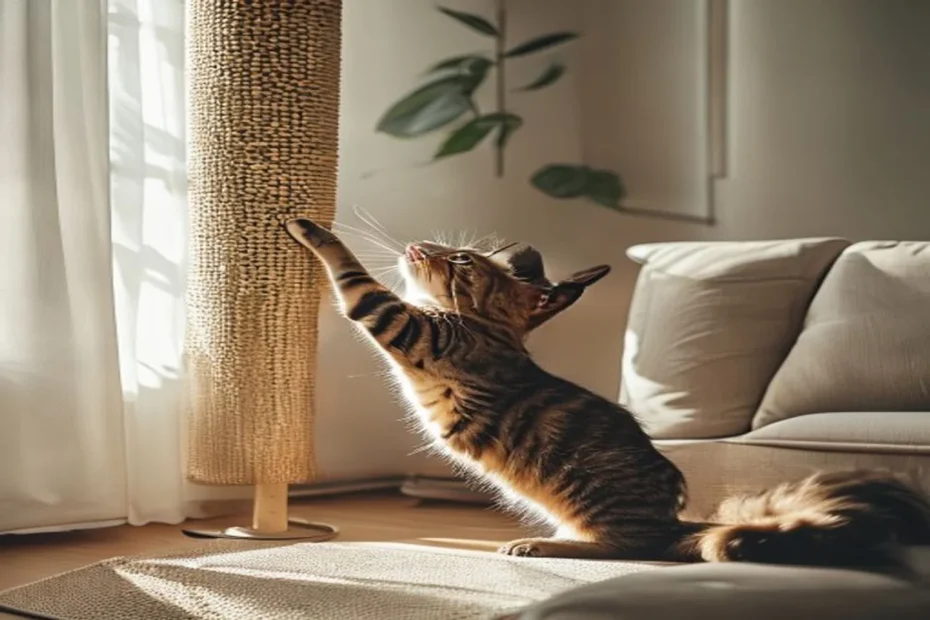
Your couch has claw marks down the side, the fabric is fraying, and you have started to dread coming home to find fresh damage. If you want to stop your cat from scratching the couch, you are in the right place. The good news: this is fixable, and you do not have to choose between your furniture and your cat.
Scratching is not bad behavior. It is a normal, healthy need. The trick is to give your cat a better target than your sofa and make the sofa less appealing at the same time.
In a small apartment, where the couch is often the biggest soft thing around, this matters even more. Let’s fix it.
Why Cats Scratch in the First Place
Before you can redirect the habit, it helps to know what is driving it. Scratching is hardwired into cats for a few real reasons, and none of them are about spite.
Cats scratch to keep their claws healthy, shedding the old outer layer. They scratch to stretch their back, shoulders, and paws after a nap. They also scratch to mark territory, since their paws leave both a visible scratch and a scent from glands in their feet.
So when your cat goes after the couch, it is checking off several boxes at once: a good stretch, a nail trim, and a scent stamp in a spot it feels good about. Your sofa just happens to be the perfect texture and the perfect height. The fix is to offer something even better.
How to Stop the Scratching, Step by Step
Work through these in order. Most cats respond within a couple of weeks if you stay consistent.
1. Give Your Cat the Right Scratching Posts
This is the foundation. A wobbly little post that tips over will be ignored. Look for one that is tall enough for a full stretch (most cats want at least 30 inches) and heavy or sturdy enough to stay put when your cat leans in hard.
Offer different textures too. Many cats love sisal rope, others prefer cardboard or carpet. If you do not know your cat’s preference yet, put out two options and watch which one wins.
2. Place the Posts Where They Actually Matter
Do not hide the post in a back corner. Put it right next to the couch your cat is targeting. The whole point is to give an equal or better option in the exact spot your cat already wants to scratch.
A post near the couch, plus one near where your cat sleeps (cats love to scratch right after waking up), covers the two highest-use moments of the day.
3. Make the Couch Less Appealing
While you build the new habit, protect the old target. You can cover the scratched area with double-sided sticky tape, a smooth throw blanket, or a plastic furniture guard. Cats dislike the sticky, slippery feel and tend to back off.
Some cats are also put off by citrus scents, so a pet-safe citrus spray near the couch (not on your cat) can help. Test a hidden patch of fabric first so you do not stain anything.
4. Reward the Good Choice
When your cat uses the post, make it a party. Offer a treat, soft praise, or a quick play session right there at the post. You can also rub a little catnip on it or dangle a toy beside it to start the first scratch. Positive habits stick when they pay off.
5. Keep the Nails Trimmed
Shorter claws do less damage and reduce the urge to scratch as intensely. Regular trims are an easy win, and you can learn to do them at home calmly. If you are nervous about it, your vet or a groomer can show you the technique or do it for you.
Quick answers
How long does it take to stop a cat from scratching the couch?
Most cats shift to a new scratching post within one to three weeks of consistent redirection. The key is offering a better target while making the couch boring, not punishing the cat.
Should I declaw my cat to save my furniture?
No. Declawing removes part of the toe bone and can cause lasting pain and behavior problems. It is banned in many places. Use posts, deterrents, and nail trims instead, and ask your vet about humane options.
Do scratching posts really work?
Yes, when they are tall, stable, the right texture, and placed where your cat wants to scratch. A flimsy post tucked in a corner gets ignored, so setup matters as much as the post itself.
Why does my cat keep scratching even after I got a post?
Usually the post is too short, too wobbly, the wrong texture, or in the wrong spot. Move it next to the couch and try a different material. Reward every use to speed things up.
Common Mistakes to Avoid
A few habits quietly sabotage your progress. Watch out for these:
- Punishing or yelling. It scares your cat and damages trust without teaching the right behavior.
- Using a post that is too short or tips over. Your cat cannot get a full stretch and will go back to the sofa.
- Placing the post far from the problem area. Convenience matters to cats.
- Giving up after a few days. Redirection takes a couple of weeks of repetition.
- Forgetting to reward the post. The good choice needs to feel worth it.
If your cat suddenly starts scratching far more than usual, or seems stressed, anxious, or off in other ways, check in with your vet. A spike in scratching can sometimes signal stress or a health issue worth ruling out.
Conclusion
You do not have to live with a shredded couch, and you do not have to take away something your cat genuinely needs. Give your cat a sturdy, well-placed scratching post, make the sofa unattractive for a while, trim those nails, and reward the right choice every time. Stay consistent and the new habit will take over.
Start today by putting one good post right next to the spot your cat loves to scratch. If the behavior seems sudden or extreme, consult your vet to rule out stress or pain.
You might also like
- How to Keep Your Cat Off the Kitchen Counters
- How to Switch Your Cat’s Food
- Why Your Cat Bites You During Petting
FAQ
Can I train an older cat to stop scratching the couch?
Yes. Older cats learn new scratching habits too. It may take a little patience, but the same steps work: a great post nearby, a protected couch, and rewards for using the post.
Are soft nail caps a good idea?
They can help protect furniture while you build the post habit. They glue over the claws and fall off naturally as nails grow. Ask your vet or groomer to fit the first set and check they fit well.
My cat only scratches the couch when I am away. Why?
That can point to stress, boredom, or territory marking when alone. Add more enrichment and a good post, and if it continues alongside other changes, talk to your vet.

Jamie Cole is a content creator focused on practical pet care for apartment living. At NestPath, Jamie shares straightforward guides on cat and dog care, pet behavior, and making small spaces work for both owners and their animals. The goal is clear, judgment-free advice for everyday pet owners who just want to do right by their pets.