How to Switch Your Cat’s Food Without Upsetting Their Stomach
In this article
You bought a better cat food, or your old one got discontinued, and now your cat has an upset stomach. Switching food too fast is one of the most common causes of vomiting and diarrhea in cats, and it’s easy to avoid.
The fix is simple: go slow. Mixing the new food into the old over about a week to ten days lets your cat’s digestion adjust and keeps the whole process smooth.
Here’s how to do it right.
Why a sudden switch causes problems
A cat’s digestive system adapts to the specific food it eats, right down to the gut bacteria that help break it down. Change the food overnight and that system can’t keep up.
The result is often vomiting or diarrhea, not because the new food is bad, but because the change came too fast. Cats tend to be more sensitive to sudden diet changes than dogs.
Transition gradually and you give the gut time to catch up, which is usually all it needs.
How to transition your cat’s food
1) Start with mostly old food
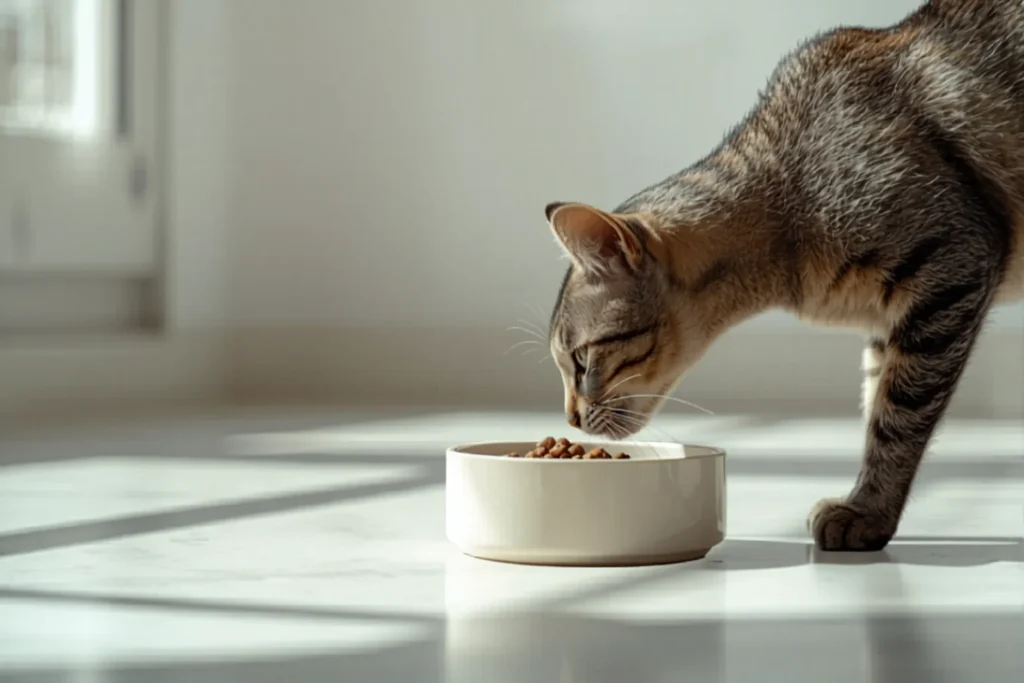
For the first couple of days, mix about a quarter new food with three-quarters old. A small amount lets the gut meet the new food without being overwhelmed by it.
The mistake most people make here is starting at half and half. That’s too much change too soon for a cat with a sensitive stomach.
2) Increase the new food gradually
Every two to three days, raise the share of new food and lower the old, moving toward half, then mostly new, over about a week. Small steps stay easy to digest, and the ratio shift is what prevents the upset stomach, not the total time it takes.
Jumping to all new food after just a day or two skips that adjustment window, and it can trigger the same stomach trouble you’d get from an abrupt switch.
3) Watch your cat and adjust the pace
If you see soft stool or vomiting, hold at the current ratio a few extra days before increasing again. Your cat’s stomach tells you the right speed better than any fixed schedule does.
Pushing ahead just because you’re on day five, even right after your cat showed signs of upset, is what turns a normal adjustment into a real problem.
Food transition questions
How long should a cat food transition take?
Usually a week to ten days. Sensitive cats, or ones switching to a very different food (dry to raw, for example), may need longer. Go by how their stomach handles each step, not by the calendar.
What if my cat won’t eat the new food?
Slow down and mix in less new food at each step, and make sure you’re not phasing out the old food faster than your cat accepts the new one. If they keep refusing, talk to your vet.
Does the same slow-switch rule apply to dogs?
Yes. Dogs also do best with a gradual transition over about a week, using the same mix-and-increase approach.
Can I switch between wet and dry food this way?
Yes. Some cats take longer to accept a new texture than a new flavor, so be patient and slow the pace down if needed.
My cat got diarrhea during the switch. What now?
Go back to a higher ratio of the old food until the stool firms up, then increase the new food more slowly than before. If diarrhea continues past a day or two, contact your vet.
When to loop in your vet
If you’re switching because of a health issue, ask your vet about the pace and the food first. Cats with sensitive stomachs or medical conditions sometimes need an even slower transition, or a specific therapeutic diet, and your vet is the one who can tell you which.