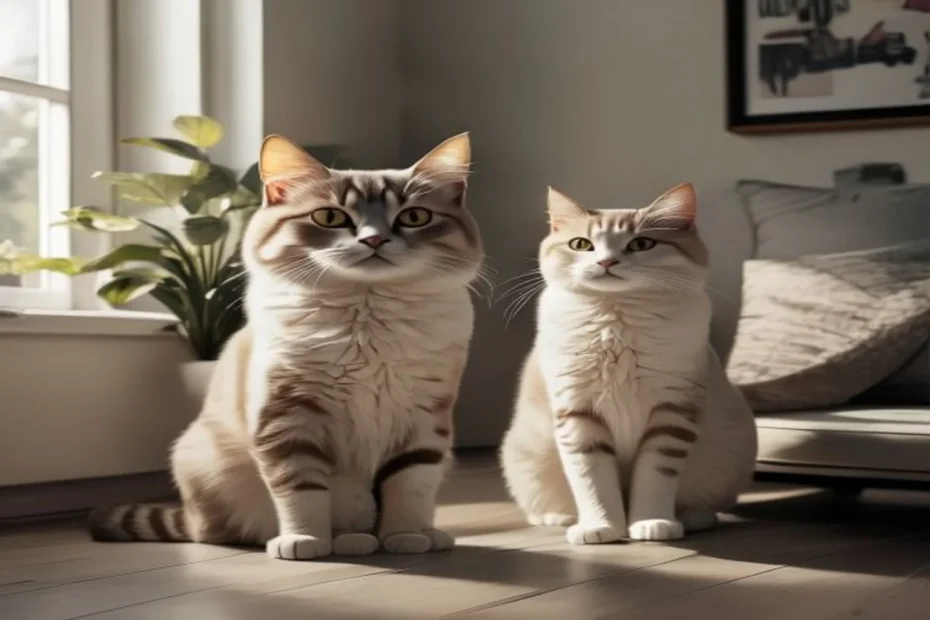
You look up from your phone and your cat is sitting across the room staring at you. Not blinking. Not moving. Just watching. It’s a little unsettling the first few times. Then you start to wonder what’s actually going on in their head.
The good news: a staring cat is rarely a sign of something wrong. The interesting news: depending on the type of stare, it can mean very different things, from “feed me” to “I love you” to “I’m slightly worried about you.” Here’s how to read it.
Why cats stare in the first place
Cats are predators with hyper-developed vision and pattern recognition. Watching is what they do. In the wild, prolonged staring serves survival functions: tracking prey, assessing threats, monitoring rivals. In your apartment, those same instincts get applied to you, the household’s most important moving object.
The fact that your cat stares at you isn’t strange. It’s their default mode. The interesting part is decoding what each kind of stare means.
The five types of cat stares and what they mean
1) The slow-blink stare (affection)
Soft eyes, half-lidded, occasional slow blink. This is the closest thing cats have to saying “I love you.” When they look at you and slowly close their eyes, they’re communicating safety and trust. A wide-open, alert stare is suspicious. A slow-blink stare is relaxed.
You can return the gesture: meet their gaze, blink slowly, look away gently. Most cats respond by blinking back. It’s a real conversation, not a coincidence.
2) The food stare (request)
Focused, alert, often accompanied by sitting upright or near their food bowl. They may flick their tail or vocalize quietly. This stare says “I expect something from you and I’m waiting.”
The trick is that cats learn fast. If you respond to the food stare with food every time, you train them to use it more. If you respond only at scheduled feeding times, the stare becomes less of a manipulation tactic and more of a calendar check.
3) The dilated-pupil stare (excitement or fear)
Pupils very wide, body tense, ears forward or flat. This is high-arousal staring. Could be excitement before play, fear of something they heard, or pre-attack focus on a moving target.
Context is everything. If your cat stares like this while watching a bird out the window, they’re in hunting mode. If they stare like this at a stranger entering the room, they’re assessing threat. Look at their ears: forward = engaged, flat or back = afraid.
4) The “I’m worried about you” stare
Sustained, soft eyes, often accompanied by approaching slowly and sitting near you. Cats notice when their human is sick, sad, or behaving unusually. The stare in this case is monitoring, not judging.
Many cat owners report this stare during illness or emotional difficulty. The cat doesn’t always come closer for cuddles, but they keep watch. It’s their way of being present.
5) The “demand” stare (training opportunity)
Direct eye contact, intense, often followed by walking up to you or batting at something. They want a door opened, a toy thrown, the bedroom blocked off, or something else specific. They’ve learned that eye contact gets your attention faster than any other signal.
This isn’t bad behavior, it’s communication. Just don’t reward demands you don’t want repeated. Cats are excellent at training humans, if you let them.
Quick answers
Why does my cat stare at me without blinking?
Cats stare for many reasons: affection (often paired with slow blinks), hunger or anticipation (often paired with body tension), or simple observation. Read the rest of their body language to know which one applies.
Is it bad to stare back at your cat?
A direct, unblinking stare can feel threatening to some cats. A soft gaze with slow blinks is comfortable and friendly. Watch their response: if they soften, you’re communicating well. If they look away or tense, soften your gaze.
What happens if you stare at a cat too long?
Sensitive cats may interpret a long hard stare as a challenge and feel uneasy. Trusting cats won’t care or will return the look with affection. Each cat reads it differently based on their personality.
Body language that goes with the stare
Reading the whole cat
The stare alone tells you 50% of the story. The rest is in the body:
- Tail still or slightly curved up: relaxed, friendly
- Tail flicking back and forth: annoyed or focused on something
- Tail puffed: scared or angry
- Ears forward: engaged, curious
- Ears flat or back: uncomfortable or afraid
- Whiskers forward: interested, alert
- Whiskers pulled back: stressed or defensive
The combination of eyes, ears, tail and whiskers gives you the full message. Reading just one part is like listening to one word of a sentence.
When the stare is worth a vet visit
Most staring is normal. A few situations are worth checking with a vet:
- Sudden change in staring behavior with other signs (eating less, hiding more, not using the litter box).
- One pupil dilated and the other not. Could indicate a neurological or eye issue.
- Cat stares at a wall or empty corner persistently. Sometimes this is just play, but combined with other unusual behavior, it can indicate cognitive changes (especially in older cats).
- Frequent staring at one specific body part of yours. Sometimes cats notice things humans can’t (skin changes, smell differences). Worth paying attention to if it’s a new pattern.
If anything feels off, trust your instinct and get them checked. Vets can rule out the rare issues quickly.
Pro tip
Next time your cat stares at you, try this: look back softly, slow blink twice, then look away. You’ll often see them return the blink or visibly relax. It takes about 5 to 10 seconds and it strengthens the bond over time. Free, instant, and grounded in real feline behavior research.
Conclusion
The cat stare is rarely random. It’s an old, instinctive form of communication that cats refined over thousands of years of partnership with humans. Once you learn to read it, you stop wondering “what’s wrong” and start understanding what your cat is actually saying.
Most stares mean “I see you, I trust you, you’re mine.” Some mean “I’d like dinner now.” A few mean “something is off and I’m keeping an eye on it.” Knowing the difference is what turns cohabitation into real companionship.
You might also like
- How to Make Sure Your Indoor Cat Gets Enough Exercise
- Why Your Cat Stops Using the Litter Box and What to Do
FAQ
Why does my cat stare at me while I sleep?
Mostly observation and routine monitoring. Cats are crepuscular (most active at dawn and dusk), so they’re often awake while you’re asleep. Some also stare because they’re hungry and waiting for you to wake up.
Why does my cat stare at me when I’m in the bathroom?
Cats hate closed doors, especially when their human disappears behind one. The stare when you reappear (or through the door if it’s cracked open) is monitoring you for safety. Some cats follow this with an indignant meow.
Is staring a sign of stress?
Not usually. Stressed cats hide more often than stare. A staring cat is usually engaged with their environment, not avoiding it. Watch for hiding, reduced appetite, or over-grooming as stress signs instead.
Can I train my cat to stop demanding stares?
Sort of. The stare itself is fine. What you train is what behaviors you reward. Ignore demand stares for things you don’t want repeated (extra treats, opening doors at random times). The stare will continue but with less expectation behind it.

Jamie Cole is a content creator focused on practical pet care for apartment living. At NestPath, Jamie shares straightforward guides on cat and dog care, pet behavior, and making small spaces work for both owners and their animals. The goal is clear, judgment-free advice for everyday pet owners who just want to do right by their pets.