How to Create a Dog-Friendly Apartment Without Ruining It
In this article
How to Create a Dog-Friendly Apartment Without Ruining It
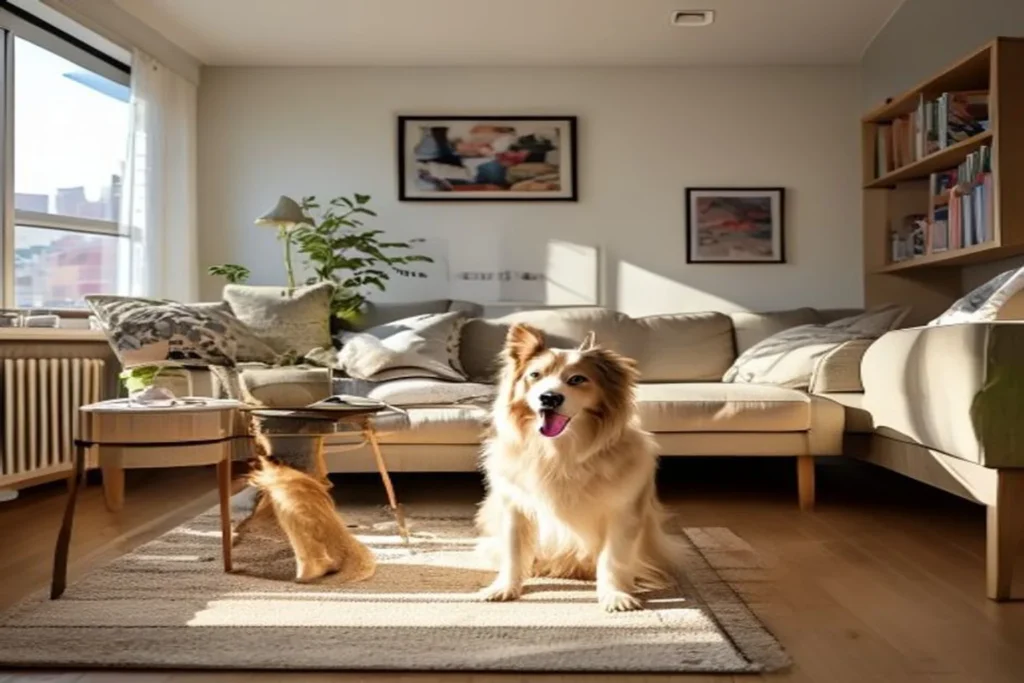
Having a dog in an apartment doesn’t mean accepting chewed furniture, scratched floors, and permanent fur coating on every surface. With the right setup and a few protective habits, you can have a space that works well for both you and your dog without feeling like the apartment belongs to the pet and not to you.
The goal is prevention first and management second. Setting up the apartment correctly from the start is far easier than undoing established dog habits.
Protect Floors Without Replacing Them
Rugs in high-traffic dog zones
- Why it works: Dogs run and turn on hard floors, which causes nails to create micro-scratches over time. A rug in the area where your dog plays, rests, and moves between rooms protects the surface and also gives dogs better traction.
- What to use: Low-pile rugs are easier to vacuum and dry faster if wet paw prints happen. Washable rugs are ideal. You can throw them in the machine when they accumulate dog smell. Place a non-slip mat underneath to prevent the rug from sliding.
- Common mistake: High-pile or shag rugs that trap fur and are impossible to clean thoroughly. They hold odors and are difficult to maintain.
Furniture covers where the dog sleeps
- Why it works: If your dog gets on the sofa or bed, washable covers protect the upholstery from fur, oils, and accidental dirt without keeping the dog off the furniture.
- What to use: Waterproof mattress protectors under regular sheets for the bed. Sofa covers or throws that can be washed weekly. Choose fabrics that are easy to shake and wash rather than anything that requires dry cleaning.
- Common mistake: Expecting the dog to avoid the furniture entirely without training. If access isn’t restricted from the start, most dogs will find their way up.
Manage Hair Without Losing Your Mind
Vacuum more often, not less
- Why it works: Hair that sits accumulates. Hair removed immediately doesn’t build into drifts in corners and doesn’t embed into fabric. Daily or every-other-day vacuuming takes 5-10 minutes and prevents the buildup that requires an hour to address.
- Best tools: A robot vacuum set to run once daily is the most effortless system. A good handheld for sofa cushions. A rubber brush or lint roller for clothing before you leave the house.
Brush the dog regularly
- Why it works: Hair brushed out in a specific spot (outside or in the bathroom over a trash bag) is hair that doesn’t end up on your sofa and floors. Shedding breeds need brushing 3-7 times per week during shed season.
- Common mistake: Only brushing when the shedding is visually noticeable. By then, the hair has already been distributed throughout the apartment.
Set Boundaries That Actually Hold
Decide on zones from day one
- Why it works: A dog that learns from day one that the bedroom is off-limits never develops the habit of sleeping on the bed. A dog that sleeps on the bed for a year and then gets told it’s off-limits is confused and frustrated.
- How to do it: Decide where the dog can and can’t go before they arrive. Use baby gates for any rooms that are off-limits. Be consistent. Everyone in the household applies the same rules, always.
- Common mistake: Letting the dog on the bed “just this once” when it’s cute and then trying to reverse it later.
Give them their own space
- Why it works: A dog that has a clear “their spot” (crate, bed, mat in a corner) is less likely to try to claim yours. Their territory is defined and comfortable.
- How to do it: Crate training is the most effective approach for giving dogs a defined safe space. Even without a crate, a specific bed in a corner of the main room that the dog is consistently directed to becomes their space. Make it comfortable and positive.
Renter-friendly dog questions
How do I stop my dog from scratching the front door?
Scratching the door usually signals anxiety about leaving or coming back in. A door scratch guard (clear adhesive film on the door surface) prevents physical damage. Address the underlying behavior with departure and arrival training that makes comings and goings low-key events rather than high-emotion ones.
What flooring is best for dog apartments?
Luxury vinyl plank (LVP) is the most popular choice for pet-friendly apartments now. It’s scratch-resistant, waterproof, and easy to clean. Hardwood is harder to maintain with dogs: it scratches and can warp if wet. If you’re renting and can’t change flooring, protective rugs are the practical solution.
How do I remove dog smell from the apartment?
Regular washing of the dog’s bedding, frequent vacuuming, and good ventilation handle most of the smell. Enzymatic cleaners (not regular cleaners) on any accident spots eliminate the source rather than masking it. An air purifier with HEPA filtration helps with airborne pet dander and odor.
My dog chews furniture. How do I stop it?
Chewing is usually a combination of teething (in puppies), boredom, or anxiety. Provide appropriate chew outlets (bully sticks, Kongs, durable chew toys). Manage access to furniture when you can’t supervise. For persistent chewers, a deterrent spray on furniture edges (bitter apple spray is the standard) makes the texture unpleasant without harming the dog. Address any anxiety component if the chewing happens when you’re absent.
Quick checklist
- ☐ Place washable rugs in all high-traffic dog zones
- ☐ Use washable furniture covers where the dog rests
- ☐ Set up a daily or every-other-day vacuum routine
- ☐ Brush the dog 3x per week minimum to control shedding at the source
- ☐ Decide and enforce zone rules from the first day the dog arrives
Common mistakes
- Allowing furniture access casually and then trying to enforce limits later.
- Not brushing regularly and letting shedding accumulate on all surfaces.
- Using regular cleaners on accident spots, which doesn’t remove the scent and invites repeat marking.
Damage-proofing without renovation
A dog-friendly apartment is mostly about prevention: deciding where the dog can go, protecting surfaces in those areas, and managing the hair at the source rather than after. Set the rules and the protective measures up before the dog arrives, stay consistent, and the apartment can stay genuinely livable for both of you without either feeling like they’re compromising.