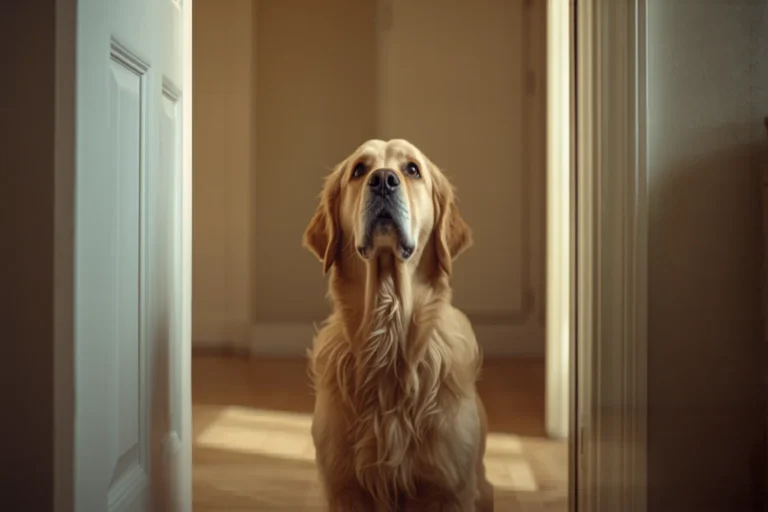
Why Your Dog Follows You Everywhere and What It Means
In this article
Why Your Dog Follows You Everywhere and What It Means
If you can’t move from room to room without your dog tailing you (including to the bathroom) you’re dealing with what’s sometimes called “velcro dog” behavior. It’s common, it’s generally harmless, and for most dogs it’s simply a feature of their personality and attachment style. But in some cases, it signals anxiety that’s worth addressing.
Understanding why your dog follows you helps you respond appropriately and, if needed, build a bit more independence into their routine.
Common Reasons Dogs Follow Their Owners
Pack instinct and bonding
- What’s happening: Dogs evolved as pack animals. Following the group leader (which is you, in their world) is instinctive. It’s a sign of bonding and trust, not anxiety. Most dogs that follow their owners everywhere are simply highly bonded.
- How to tell: A bonded follower is relaxed while following, not panting, not whining, not destroying things when you leave the room. They’re just… keeping tabs on you.
Learned association
- What’s happening: Dogs learn that following their person often leads to good things: food, walks, play, attention. If your dog discovered early on that going to the kitchen with you often means a treat, they’ll follow you to the kitchen forever.
- How to tell: The following intensifies around routine events (meal time, walk time, your getting-ready routine).
Boredom
- What’s happening: An under-stimulated dog sees their owner as the most interesting thing in the apartment. Following you is entertainment and connection when nothing else is happening.
- How to tell: Follows you all day, but the following drops noticeably after a good walk or play session.
Separation anxiety
- What’s happening: This is the case where the following is driven by distress rather than bonding or habit. The dog is anxious about losing sight of you and can’t self-regulate when separated.
- How to tell: The dog panics (barking, destruction, panting, pacing) when you’re out of sight even briefly, not just when you leave the apartment. Separation anxiety typically requires behavioral intervention and sometimes veterinary support.
Is It a Problem?
In most cases, no. A dog that follows you calmly is fine. You don’t need to “fix” a dog that simply likes to be near you.
It becomes a concern when:
- The dog panics or destroys things when left alone even for short periods
- The dog shows clear distress (panting, trembling, whining) when you go to another room
- The behavior prevents the dog from resting when you’re home
If You Want to Build More Independence
Practice “stay” in small increments
- Ask the dog to sit and stay. Take one step away. Return and reward. Gradually increase distance and duration over weeks. The goal is that the dog learns being out of your immediate sight is safe and temporary.
Reward independence, not just proximity
- When your dog voluntarily settles somewhere other than right next to you, reward that calmly. Over time, you’re building an association between independent rest and good things happening.
Establish a “place” command
- Teach the dog that a specific bed or mat is their station. “Go to place” becomes a signal that they stay there while you move around. This gives the dog a clear job and reduces the scanning/following behavior.
Questions about a dog that follows you
Is it bad to let my dog follow me everywhere?
Generally no. The main risk is that a highly attached dog who’s never practiced being alone develops anxiety when left. If your dog follows you everywhere, make sure they also get regular practice being calm when you’re not in view, even just for 15-20 minutes daily.
My dog only follows me, not other family members. Why?
Dogs bond most strongly to their primary caregiver (who feeds them, walks them, and spends the most time with them). It’s not rejection of others, it’s attachment to their anchor person. Involving other household members more in feeding and play helps distribute the attachment.
Can following behavior develop into separation anxiety?
Sometimes, especially if it’s never been managed. A dog that’s never practiced being alone or out of sight can become increasingly dependent. Building in small independent periods regularly reduces that risk.
What breeds are most likely to be “velcro dogs”?
Breeds historically bred to work closely with humans (Labrador Retrievers, Golden Retrievers, Border Collies, Vizslas) tend toward high attachment. But individual personality varies significantly within any breed. Some Labs are remarkably independent; some Huskies are total velcro dogs. Genetics plays a role but doesn’t fully predict the individual dog.
Before you start
- ☐ Observe whether the following is calm (bonding) or distressed (anxiety)
- ☐ Practice daily independent rest periods for your dog
- ☐ Reward calm settling away from you
- ☐ Increase exercise if following intensifies during inactive periods
- ☐ Talk to your vet or a trainer if you notice clear anxiety signals
What not to do
- Assuming all following is separation anxiety when most of it is simply bonding.
- Correcting the dog for following when it’s calm and not causing any problem.
- Not building in any practice for independence, which can lead to anxiety over time.
Attachment, and when it is not
Most dogs that follow their owners everywhere are doing it because they’re attached, bored, or have learned it leads to good things. That’s normal dog behavior. The question isn’t whether to “stop” it, but whether the dog can also be calm and settled when you’re not right there. Build that capacity gradually and the following becomes a sign of a happy, bonded relationship rather than a concern.