How to Potty Train a Dog in an Apartment Building
In this article
How to Potty Train a Dog in an Apartment Building
Potty training a dog in an apartment is harder than in a house with a backyard, but it’s completely doable. The main challenge is distance: you need to get your dog outside and down an elevator before they have an accident. That requires a tighter schedule and more consistency than most people expect going in.
The good news: puppies can learn quickly when the routine is clear. And adult dogs who were trained before can usually adapt to apartment living within a few weeks.
The Core Principle: Timing Beats Punishment Every Time
Potty training works by rewarding the behavior you want in the right location, not by punishing accidents inside. A dog that gets scolded for going inside learns to fear you, not to go outside. A dog that gets praised and treats for going outside learns exactly what you want.
In an apartment, timing is the whole game. You need to get your dog outside before they need to go, not after.
How to Build a Schedule That Works
Take them out on a strict schedule
- Why it works: Puppies typically need to go out every 1-2 hours. Adult dogs can last 4-6 hours, sometimes longer. A schedule removes ambiguity for both of you.
- How to do it: First thing in the morning (before anything else). After every meal, usually 15-20 minutes after eating. After naps. Before bed. During the night for young puppies. Set phone alarms if needed. Consistency in timing trains the dog’s body clock to match your schedule.
- Common mistake: Taking them out “when you remember” instead of on a schedule. The inconsistency is what leads to accidents.
Go to the same spot outside every time
- Why it works: The familiar smell of previous eliminations signals to the dog that this is where going to the bathroom is allowed. It speeds up the process significantly.
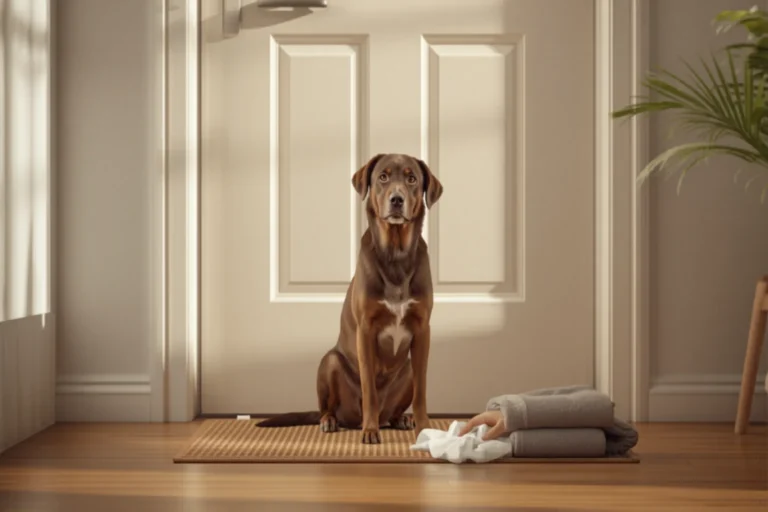
- How to do it: Pick a spot close to the building’s exit that’s accessible quickly. Use it every single time. Don’t let the dog wander and sniff for 10 minutes. Bring them to the spot, say a cue word (“go potty,” “do it,” whatever you choose), and wait quietly for up to 5 minutes.
- Common mistake: Letting the dog lead the walk before they’ve done their business. They get distracted, never go, and then relieve themselves inside 10 minutes later.
Celebrate success immediately
- Why it works: Dogs connect reward to the behavior that just happened seconds ago. Rewarding while they’re still squatting or immediately after creates a direct association.
- How to do it: Keep treats in your pocket every time you go out. The moment your dog finishes, say “yes!” in a bright voice and give the treat immediately. After a few weeks, you can phase out treats and use verbal praise alone.
- Common mistake: Waiting until you’re back inside to give the reward. By then, the dog has no idea what they’re being rewarded for.
Manage the indoor environment carefully
- Why it works: A dog that can’t be watched is a dog that can have accidents. Limiting their access to the apartment while training prevents mistakes from becoming habits.
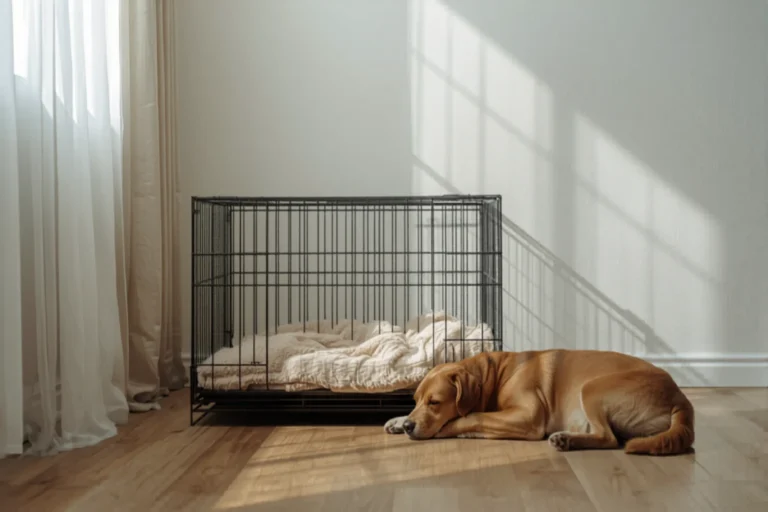
- How to do it: Keep the dog in the same room as you when unsupervised. Use a crate or playpen when you can’t watch them (dogs instinctively avoid soiling their sleeping area). Gradually increase their freedom as they prove reliable.
- Common mistake: Giving too much freedom too fast. A dog that goes three days without an accident isn’t fully trained, they’re building a reliable habit.
Handle accidents without drama
- Why it works: Reacting with anger confuses and frightens the dog without teaching them anything useful about where they should go.
- How to do it: If you catch them mid-accident, interrupt calmly (not loudly), bring them outside immediately and praise if they finish there. If you find an accident after the fact, clean it up without comment using an enzymatic cleaner (regular cleaners don’t remove the scent signal fully). No scolding for past accidents.
- Common mistake: “Showing them” the accident and scolding. Dogs don’t connect a past action to a present reaction the way people assume they do.
Apartment potty training questions
How long does apartment potty training take?
Most puppies are reliably trained by 4-6 months of consistent effort. Adult dogs from houses often adapt to apartments in 2-4 weeks if the schedule is clear. Some dogs take longer, especially those with previous inconsistent training.
What if my dog won’t go outside in bad weather?
Some dogs refuse to go out in rain or cold. For those, a light raincoat or booties for cold weather can help. If they still refuse, wait them out calmly. Eventually, they go. Once they do it once in bad weather and get rewarded, it gets easier. Never punish them for reluctance: that makes the outdoor association negative.
Should I use pee pads as backup?
Pee pads can be useful as a temporary backup, especially for puppies who can’t hold it through the night yet. The risk is that they teach the dog it’s sometimes okay to go inside. If you use them, be intentional: only in a specific spot, and phase them out as the dog gains bladder control.
At what age can a puppy be fully potty trained?
Most puppies have the physical bladder control needed for reliable training around 4-6 months. Before that, they simply can’t hold it long enough for a strict schedule to fully work. That doesn’t mean you don’t train (you do) but expect some setbacks until their bladder matures.
Practical checklist
- ☐ Set a fixed schedule with phone alarms for the first month
- ☐ Pick one outdoor spot and use it every time
- ☐ Keep treats in your pocket on every outing
- ☐ Limit indoor freedom until the dog is reliably trained
- ☐ Use enzymatic cleaner for all indoor accidents
What not to do
- Waiting for the dog to signal instead of going on a proactive schedule.
- Letting the dog explore before going to the bathroom outside.
- Punishing accidents instead of rewarding success.
Schedule first, everything else second
Potty training in an apartment comes down to one thing: getting your dog outside before they need to go, every time, on a tight schedule. It takes a few weeks of real consistency, but once the habit is built it holds. Stick to the schedule, reward the wins, and manage accidents without drama.