How to Groom Your Dog at Home Without Making a Mess
In this article
Dog grooming at home saves money and time, once you have a setup that contains the mess. The mess, not the grooming itself, is what stops most owners.
The right location and preparation makes home dog grooming manageable in an apartment.
> 💡 Key idea: Do messy steps in the bathroom with the door closed. Brushing and nail trims can happen anywhere.
Quick summary (for busy people)
- ✔️ Brush before bathing to remove loose hair
- ✔️ Bathroom with the door closed contains wet dog mess
- ✔️ Dog-specific shampoo only: human shampoo disrupts skin pH
- ✔️ Nail trims every 4-6 weeks, or when you hear clicking on the floor
Home dog grooming setup
1) Brushing
- Why it matters: Regular brushing prevents matting, reduces shedding, and is the best indicator of skin health.
- How to do it: Slicker brush for most coats, de-shedding tool for heavy shedders. Brush in the direction of hair growth. Do the full body including behind ears and under armpits where mats form.
- Common mistake: Skipping problem areas because the dog resists.
2) Bathing
- Why it matters: Dogs need bathing every 4-8 weeks depending on coat and lifestyle. More frequently in wet weather or after outdoor activity.
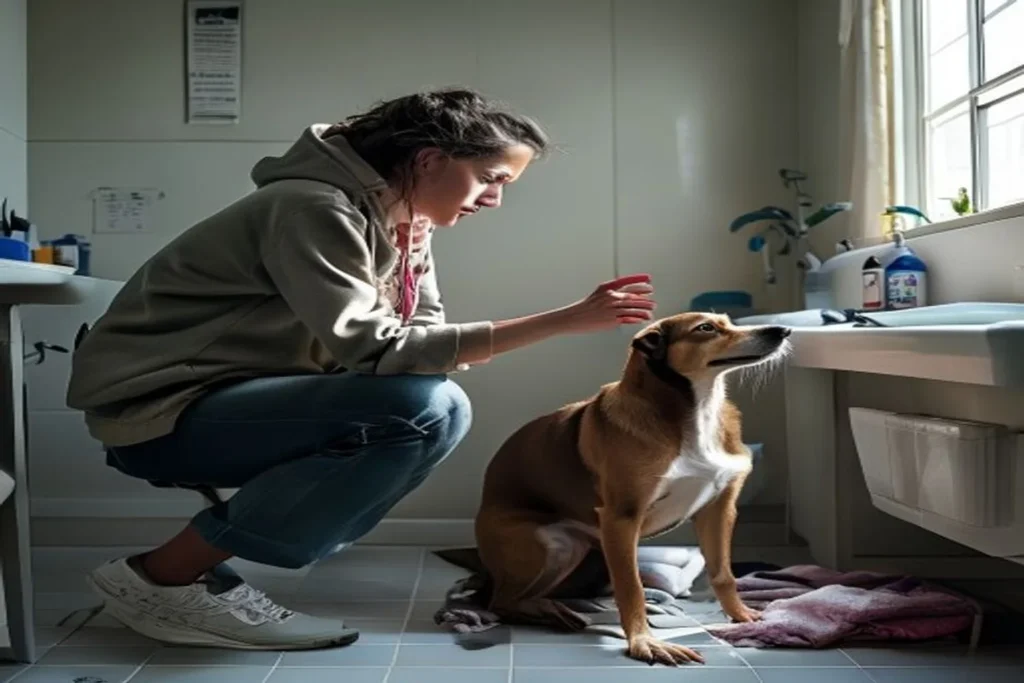
- How to do it: Brush first. Bathroom door closed with a bath mat for traction. Lukewarm water, dog shampoo, work from neck down. Rinse completely. Towel dry, then low-heat blow dryer if the dog tolerates it.
- Common mistake: Not rinsing thoroughly: soap residue causes skin irritation.
3) Nail trimming
- Why it matters: Overgrown nails cause pain when walking and change the foot structure over time.
- How to do it: Hold paw firmly. Cut at a 45-degree angle, removing only the tip. Avoid the quick (pink line in light nails; harder to see in dark nails: trim conservatively). File any sharp edges.
- Common mistake: Cutting too much at once. If unsure, do less and more frequently.
4) Ear cleaning
- Why it matters: Dogs with floppy ears are prone to ear infections due to reduced air circulation.
- How to do it: Veterinary ear cleaning solution on a cotton ball. Wipe the visible outer ear. If there’s excessive wax, strong odor, or the dog shakes its head frequently, see the vet.
- Common mistake: Using cotton swabs in the ear canal.
Dog grooming questions
How often should I bathe my dog?
Most dogs: every 4-8 weeks. Dogs with skin conditions or heavy coats may need more or less. Over-bathing strips natural oils; under-bathing causes odor and skin buildup.
My dog won’t let me trim its nails. What do I do?
One nail per day over several weeks, with treats. Build up to full trims gradually. A professional groomer once can help set the baseline while you continue maintenance.
Can I use baby shampoo on my dog?
In an emergency, yes. Regularly, no. Dog skin has a different pH than human skin. Dog-specific shampoo maintains skin health; human products disrupt the natural balance.
How do I keep my dog still during grooming?
Regular short sessions build tolerance over time. A lick mat or chew occupies attention during bathing. Having a second person helps for nail trims with a wiggly dog.
What’s the difference between a slicker brush and a de-shedding tool?
Slicker brush removes loose hair and smooths the coat, good for all coats. De-shedding tools (like the Furminator) reach the undercoat for heavy shedders. Using both is ideal for double-coated breeds.
Quick checklist
- ☐ Brush before every bath
- ☐ Dog-specific shampoo and conditioner
- ☐ Non-slip mat in the bathing area
- ☐ Nails trimmed every 4-6 weeks
- ☐ Ears checked and cleaned monthly
Avoid these
- Skipping brushing before bath: wet mats are significantly harder to remove than dry ones.
- Using human shampoo regularly.
- Bathing too frequently, stripping the coat of natural oils.
Pro tip
Put a lick mat with peanut butter on the wall of the tub during bath time. Most dogs focus entirely on licking and stand still through the whole bath.
Contain the mess and the rest follows
Home dog grooming in an apartment is a matter of containment and routine. The bathroom handles the mess. Regular short sessions handle the dog’s tolerance. Once the routine is established, grooming becomes an expected part of the week rather than an event.