Dog Beds That Actually Fit in Small Apartments
In this article
Dog beds take up more space than most apartment owners plan for. The wrong bed can dominate a small room.
The right one fits the dog, fits the space, and fits where you actually need it: next to your bed, under a desk, in a corner.
> 💡 Key idea: The bed should be 1.5x the length of the dog when lying down. Beyond that, the shape and design matter more than size for small apartment use.
Quick summary (for busy people)
- ✔️ Round and oval beds have smaller footprints than rectangular ones of similar sleeping size
- ✔️ Raised or cot-style beds keep floor space visually open
- ✔️ Washable covers are non-negotiable in small spaces
- ✔️ Under-desk placement works for many medium dogs
The best dog bed styles for small apartments
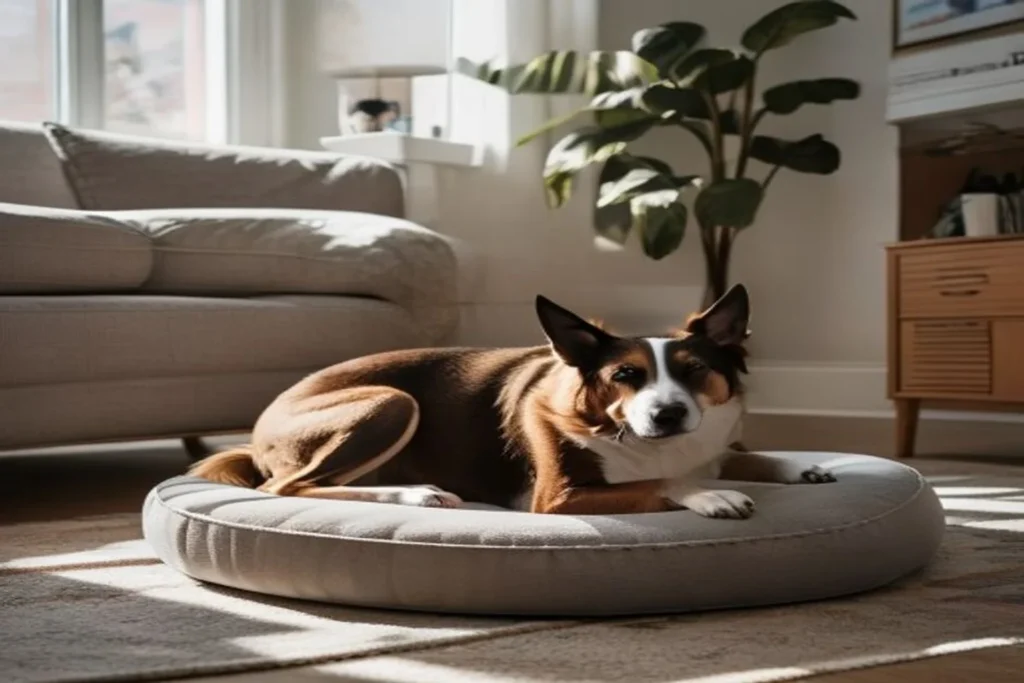
1) Round donut/bolster beds
- Why they work: Dogs who curl to sleep use the full diameter, making round beds efficient by size. The raised edge provides security: many anxious dogs prefer these.
- Best for: Dogs who curl up. French Bulldogs, Pugs, smaller terriers.
- What to look for: Waterproof inner liner, removable machine-washable cover, non-skid bottom.
2) Flat mat or pad
- Why it works: The lowest profile option. Easy to place under a desk or at the foot of the bed.
- Best for: Dogs who stretch out flat. Greyhounds, Labs, dogs who don’t need warmth from enclosed sides.
- What to look for: Dense foam or memory foam insert, waterproof inner, fully washable.
3) Elevated cot bed
- Why it works: The raised design keeps the dog off cold floors and the open-frame design makes the room feel less crowded visually.
- Best for: Dogs who run hot, older dogs with joint pain who struggle to get up from floor level.
- What to look for: Weight capacity rated well above the dog’s weight, breathable mesh or canvas surface.
4) Furniture-integrated bed
- Why it works: End tables and ottomans with built-in dog beds exist. They function as furniture and double as the dog’s space without extra footprint.
- Best for: Owners who want the dog near them without the visual disruption of a separate pet item.
- What to look for: Solid construction, removable interior cushion.
Dog bed questions for small spaces
How do I know what size bed my dog needs?
Measure your dog from nose to tail when lying in their natural sleeping position. Add 20-30 cm. That’s the minimum bed dimension needed.
Where should the dog bed go in a small apartment?
Under a desk, in a corner, at the end of the sofa, or beside the bed. Anywhere the dog naturally gravitates anyway. Avoid high-traffic pathways.
Can dogs share a bed?
Some do well; others need their own space. If you have two dogs, try one large bed first. Persistent conflict or one dog monopolizing the bed means two separate beds are needed.
How often should I replace a dog bed?
When the filling compresses enough that the dog is essentially sleeping on the floor, or when odors can’t be fully removed by washing. Typically every 2-4 years depending on material quality.
Are orthopedic beds worth it?
For dogs over 7 years or any dog with joint issues, yes. For young healthy dogs, a good quality standard bed is sufficient.
Run through this
- ☐ Bed is at least 1.5x dog’s length when lying down
- ☐ Cover is machine washable
- ☐ Placed where dog already naturally rests
- ☐ Non-skid bottom to prevent sliding on hard floors
What not to do
- Too-small bed: dog hangs off the edges and stops using it.
- Non-washable covers in a small space where odors concentrate quickly.
- Placing the bed in a low-traffic room the dog never uses.
Pro tip
Put an unwashed t-shirt or worn sweatshirt in the bed when first introducing it. Your scent makes the bed far more appealing and accelerates adoption.
Match the bed to how your dog sleeps
The right dog bed in a small apartment isn’t about compromise, it’s about choosing the right form for the space. Round for curlers, flat for stretchers, elevated for joint support. Any of them work in a small apartment if placed where the dog already wants to be.