8 Signs Your Cat Is Happy and Healthy
In this article
Cats are good at hiding discomfort. They’re less good at hiding happiness, and the signs of a genuinely content cat are worth knowing.
Beyond obvious health markers, a happy cat communicates through body language, behavior, and specific actions that most owners notice but don’t always interpret correctly.
> 💡 Key idea: A happy cat is relaxed, curious, and maintains normal routines. Any deviation from baseline is worth paying attention to.
Quick summary (for busy people)
- ✔️ Slow blink is the clearest communication of trust and comfort
- ✔️ Normal eating, drinking, and litter box habits signal health
- ✔️ Grooming is a sign of wellbeing, but overgrooming is a stress signal
- ✔️ Play interest at appropriate life stage indicates good quality of life
8 signs your cat is happy and healthy
1) The slow blink
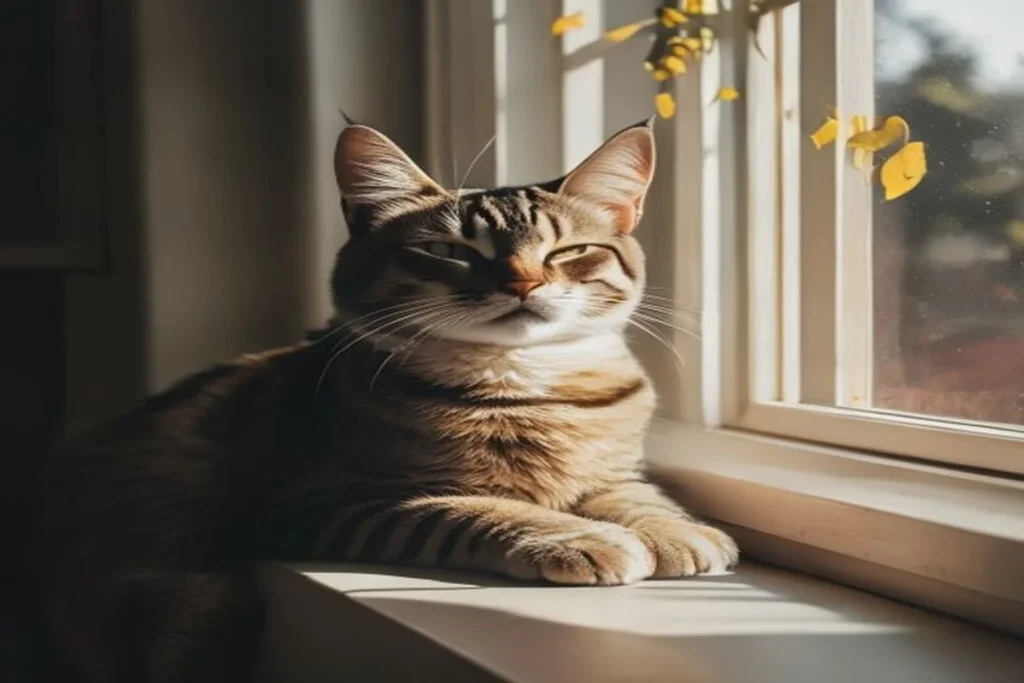
- What it means: When a cat looks at you and slowly closes and opens their eyes, it’s a direct communication of trust and comfort. Often called a “cat kiss.”
- What to do: Slow blink back. Many cats respond and it deepens the bond.
- Common mistake: Missing it because it’s subtle compared to dog body language.
2) Upright, confident tail posture
- What it means: A cat approaching with its tail straight up (often with a slight curve at the tip) is showing confidence and positive intent.
- What to do: This is how cats greet others they’re comfortable with. Allow them to come to you.
- Common mistake: Confusing a raised tail with aggression: a puffy tail is aggression, a straight smooth tail is greeting.
3) Normal, consistent eating habits
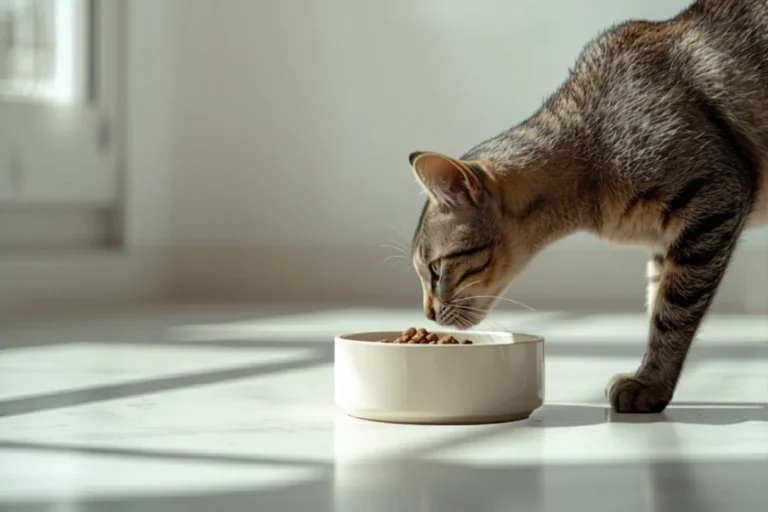
- What it means: Eating with enthusiasm at consistent times indicates physical wellbeing and absence of dental pain.
- What to watch for: Sudden changes in appetite in either direction are the first signal of many health issues.
- Common mistake: Ignoring reduced appetite for several days because the cat “seems fine otherwise.”
4) Active grooming (but not excessive)
- What it means: Cats groom up to 50% of their waking time. Regular grooming indicates physical comfort and emotional stability.
- Red flag: Overgrooming (bald patches, skin irritation) or complete cessation of grooming. Both signal problems.
- Common mistake: Assuming any amount of grooming is normal.
5) Kneading
- What it means: The rhythmic pushing motion with paws, often on soft surfaces or their person, is a comfort behavior that originates from kittenhood nursing.
- What to do: Accept it as a compliment. It means the cat feels completely safe.
- Common mistake: Stopping the cat from kneading, which removes a calming self-regulation behavior.
6) Play interest appropriate to age
- What it means: Kittens and young adults should actively seek play. Senior cats play less but should still show occasional interest in toys or movement.
- Red flag: A young cat with no interest in play, or a senior cat who’s completely stopped moving around.
- Common mistake: Assuming a cat is happy because it’s quiet, when disinterest in activity is actually a warning sign.
7) Comfortable around you specifically
- What it means: Sleeping near you, seeking out your lap, following you between rooms. These indicate attachment and security.
- What to watch for: A previously affectionate cat who suddenly avoids contact often indicates illness or pain.
- Common mistake: Not noticing behavioral withdrawal because the cat “always does that.”
8) Normal bathroom habits
- What it means: Consistent litter box use, appropriate frequency, no straining or calling out.
- Red flag: Any deviation (going outside the box, straining, blood in urine) warrants a vet call.
- Common mistake: Assuming litter box issues are behavioral when they’re often medical.
Questions about a content cat
Do cats purr when they’re unhappy?
Yes. Cats also purr when stressed, in pain, or healing. Purring is self-regulation, not just happiness. Context matters.
How do I know if my cat is bored vs. just independent?
Bored cats often sleep excessively, show destructive behavior, or overeat. Independent cats are active when motivated and have normal varied behavior patterns.
My cat sleeps 18 hours a day. Is that normal?
Yes for adult cats. Cats are crepuscular (most active at dawn and dusk) and naturally sleep a lot. Total inactivity when awake is the concern.
Does my cat love me if it headbutts me?
Yes. Headbutting (bunting) is how cats deposit scent from glands in their face, it’s marking you as safe and familiar. It’s a direct expression of trust.
Why does my cat bring me toys or “gifts”?
This is hunting behavior directed toward a trusted member of the social group. It’s a compliment, not a problem behavior.
Before you start
- ☐ Slow blinks observed during relaxed interactions
- ☐ Tail-up greeting when you come home
- ☐ Normal eating and drinking patterns maintained
- ☐ Active grooming without bald patches
- ☐ Seeks your company at least occasionally
Avoid these
- Equating quiet with happy: disengagement is often the opposite.
- Missing behavioral changes because they develop gradually.
- Interpreting all purring as contentment.
Pro tip
The “whisker check” is a quick happiness indicator: relaxed whiskers pointing slightly forward and outward mean comfort. Whiskers pulled tight to the face indicate fear or stress.
Learn your cat’s normal
A happy cat leaves clear signals once you know what to look for. The slow blink, the upright tail greeting, the kneading on a lap: these aren’t random behaviors. They’re communication. And the most important habit you can build is knowing your cat’s normal, so you notice when something changes.