How to Keep a Dog Entertained Indoors on Rainy Days
In this article
A rainy day doesn’t have to mean a bored, restless dog.
Mental stimulation tires dogs out nearly as fast as physical exercise. A 15-minute puzzle session can calm a high-energy dog as effectively as a 30-minute walk.
> 💡 Key idea: Mental enrichment isn’t a poor substitute for exercise. For many dogs, it’s equally effective.
Quick summary (for busy people)
- ✔️ Kong or puzzle feeder turns meals into 20-minute activities
- ✔️ Nose work games burn mental energy fast
- ✔️ Short training sessions satisfy the brain and deepen the bond
- ✔️ Tug of war with structure provides physical and mental outlet
Indoor activities that actually work
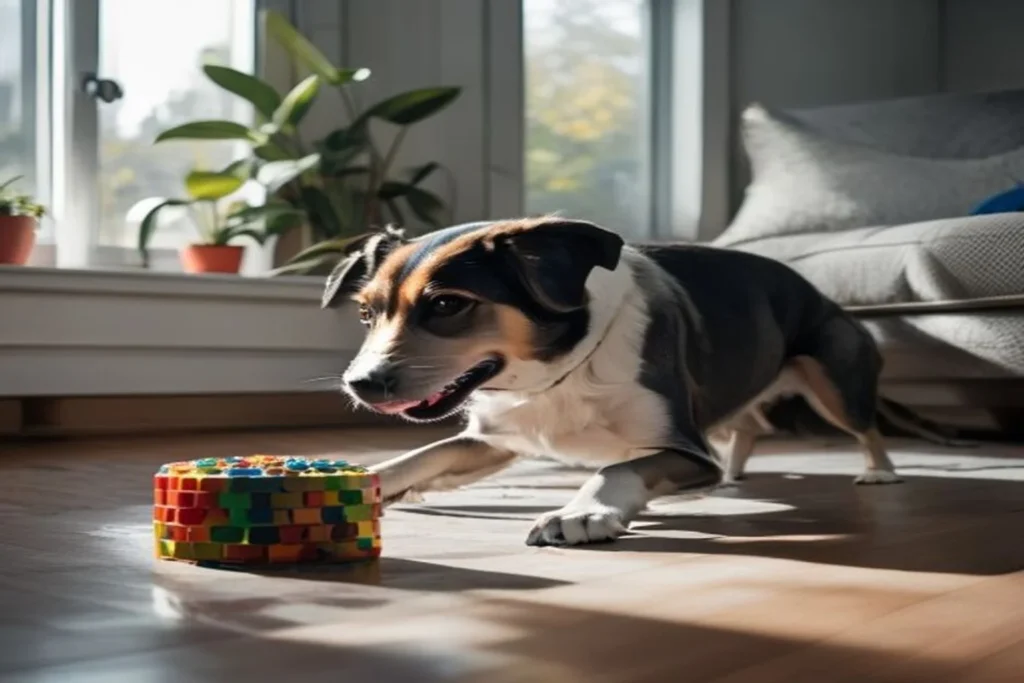
1) Stuffed Kong or puzzle feeder
- Why it works: Eating from a bowl takes 30 seconds. Eating from a stuffed Kong takes 15-20 minutes and requires problem-solving.
- How to do it: Mix kibble with a spoonful of peanut butter or wet food. Freeze overnight for a longer-lasting version. Start with easy puzzles and increase difficulty as the dog improves.
- Common mistake: Starting too difficult: dogs lose interest if they can’t succeed.
2) Nose work hide-and-seek
- Why it works: Dogs process smell as their primary sense. Nose work is mentally exhausting in the best way.
- How to do it: Hide treats around the apartment in increasingly difficult spots. Start easy (visible treat on the floor) and build to harder hides. Give a release cue (“find it!”) before starting.
- Common mistake: Hiding treats before the dog is in another room, which eliminates the search challenge.
3) Indoor training sessions
- Why it works: Training provides structure, mental engagement, and reinforces your relationship with the dog.
- How to do it: 10-15 minute sessions work better than long ones. Review known commands, add new ones, or practice more complex sequences. Always end on a success.
- Common mistake: Sessions that go too long until the dog loses focus and practices getting it wrong.
4) Tug of war with rules
- Why it works: Structured tug provides physical outlet and teaches impulse control.
- How to do it: Offer the toy as the start cue. Play energetically. Practice “drop it” throughout. Keep the toy put away between sessions so it stays exciting.
- Common mistake: Playing with no rules, which can increase arousal rather than satisfy it.
Rainy day questions
How much indoor activity does a dog need on a rainy day?
30-45 minutes of mental or physical activity spread through the day covers most dogs. A puzzle session, a training session, and some play.
What if my dog won’t engage with puzzle toys?
Start simpler: scatter kibble on the floor first. This builds the idea of searching for food before adding a mechanical challenge.
Can indoor activity replace outdoor exercise entirely?
Occasionally, yes. For chronic indoor-only existence, high-energy breeds will develop behavioral issues over time.
What’s the best puzzle toy for a strong chewer?
KONG Extreme (black rubber) or similar heavy-duty options. Standard puzzle feeders may not hold up to aggressive chewers.
How often should I rotate toys?
Every 2-3 days. Dogs lose interest in toys they have constant access to. The same toy becomes exciting again after a few days away.
Quick checklist
- ☐ Kong prepared and in freezer for rainy day readiness
- ☐ Puzzle feeder available at appropriate difficulty
- ☐ Training cues refreshed this week
- ☐ Tug toy available and separate from other toys
Mistakes to avoid
- Waiting until the dog is restless before providing activity.
- Constant toy access: rotate toys so each feels novel.
- Skipping activity because the dog “seems fine.”
Pro tip
Prep 3-4 frozen Kongs on Sunday and keep them in the freezer. On any day you need to occupy the dog quickly (rainy, busy, or recovery day) you always have a ready solution.
A tired mind tires the dog
Rainy days don’t have to mean bored dogs. Twenty minutes of nose work, a stuffed Kong, and a training session provide enough stimulation for most apartment dogs to genuinely rest afterward. The key is having the tools ready before the day arrives.